Super Micro Stock Jumps 7%
....................................................................................................................



Good morning!
The stock market is hitting the pause button this Wednesday morning, with everyone on Wall Street staring at the exact same thing: today's brand-new inflation numbers.
Markets are mostly sitting on their hands, though tech-heavy Nasdaq futures are edging up slightly. Why the sudden hesitation? Wall Street is holding its breath for the July Consumer Price Index report, and nobody wants to place a big bet right before the numbers drop. Last week's weak job report made investors hopeful that the Federal Reserve would leave interest rates alone. But right now, traders are split right down the middle—a 50-50 toss-up—on whether the Fed will raise rates next month or keep them right where they are.
Making matters worse, the ongoing drama in the Middle East is keeping energy prices painfully high. Peace talks between the U.S. and Iran over the Strait of Hormuz are completely stuck, and after fresh naval friction in the Gulf, oil jumped back up toward $90 a barrel. Higher gas prices make overall inflation much harder to tame, which is driving up bond yields globally.
This puts the market in a very simple spot today. If inflation shows signs of cooling down, investors will get the green light they’ve been waiting for. But if prices come in hotter than expected, those interest rate fears will come roaring right back.

💻 Supermicro Jumps on Q4 Beat and Strong FY27 Outlook
Super Micro Computer shares rallied after delivering strong earnings and an upbeat fiscal 2027 outlook. CEO Charles Liang noted that the company generated over $60 billion in new orders and booked a record backlog, driven by sustained demand for its total AI/IT enterprise solutions.
🥇Gold Rebounds Toward $4,400 Baseline Ahead of U.S. CPI
Spot gold rose nearly 1% to touch $4,406 per ounce on Wednesday as markets prepared for key U.S. inflation data. Reduced expectations for Federal Reserve policy tightening and persistent geopolitical safe-haven demand continued to bolster bullion prices.
🏛️ Norway Sovereign Wealth Fund Reports $184B Record Profit
Norway's $2.3 trillion sovereign wealth fund posted a record $184 billion half-year profit, returning 9.4% behind a surge in tech equities. The fund also revealed a 0.05% stake in SpaceX valued at $1.2 billion alongside massive holdings in Nvidia and Apple.
🛢️Brent Nears $90 as Red Sea Attacks Fuel Supply Fears
Oil benchmarks edged higher on Wednesday, pushing Brent crude toward $89.32 a barrel after deadly attacks on vessels in the Red Sea and Gulf of Oman. The renewed maritime risks offset tentative diplomatic signs of progress toward reopening the Strait of Hormuz.
🐱 Sanrio Shares Plunge 18% Following First-Quarter Earnings
Hello Kitty parent company Sanrio saw its stock tumble 18% in Tokyo following its fiscal Q1 release. Despite year-over-year gains in revenue and operating profit, shares faced heavy profit-taking after reaching fair value targets following a massive pre-earnings rally.
☁️ CoreWeave Pops 14% on Doubled Revenue and AI Demand
CoreWeave shares jumped 14% in extended trading after beating second-quarter expectations. The specialized cloud provider saw its revenue double year-over-year, driven by accelerating enterprise demand for high-performance AI compute infrastructure.
🌍 European Bourses Hold Steady Before Inflation Data Release
Global equities remained rangebound while South Korea's Kospi gained 3.7% in regional trading. Investors maintained a cautious stance ahead of the U.S. CPI print, as renewed Middle East shipping attacks and firm rhetoric from Iranian officials kept market risk premiums elevated.

Following Someone Else's Trade Doesn't Give You Their Edge
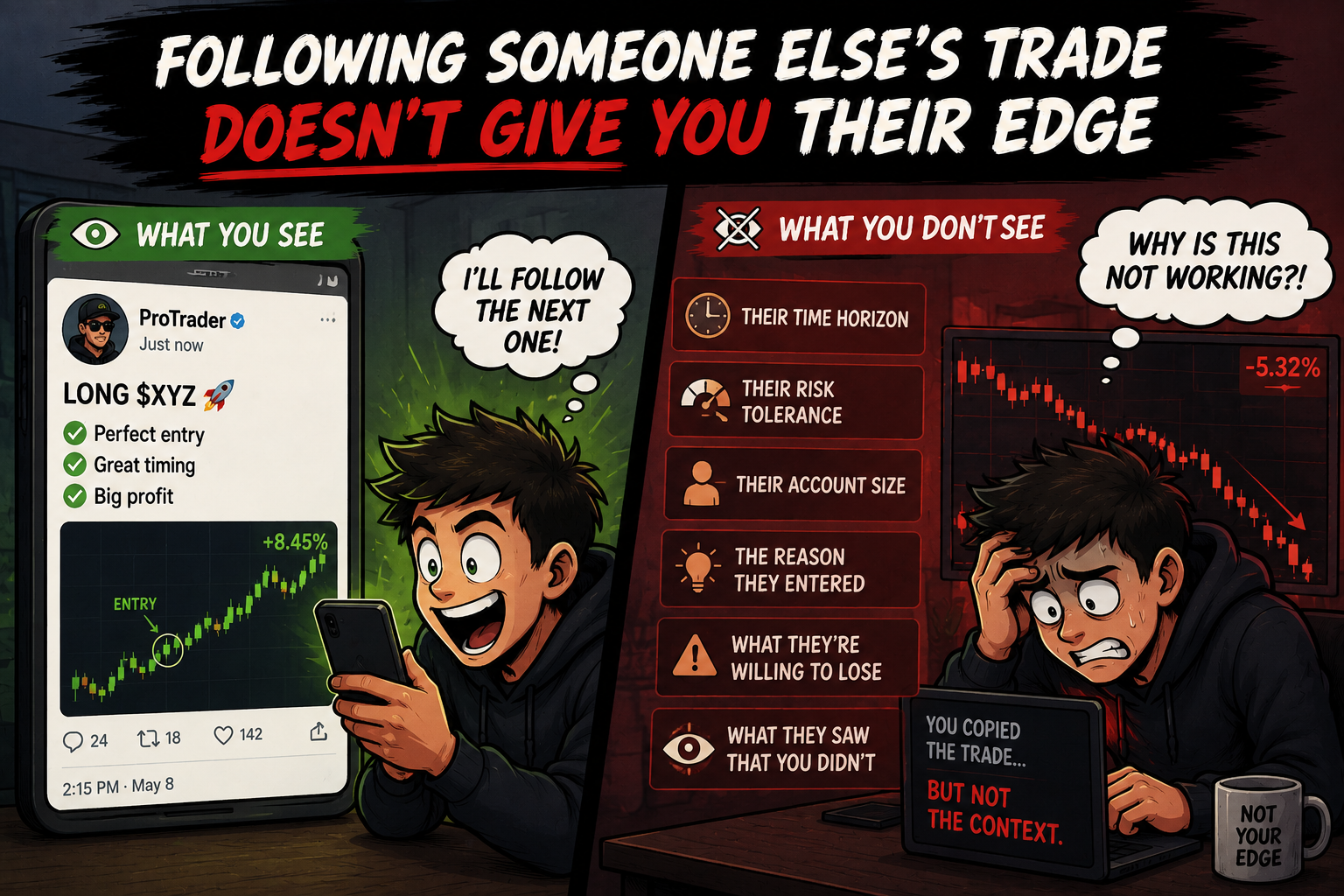
You see a trader post a winning trade.
Perfect entry. Great timing. Big profit.
So you decide to follow the next one.
But there's something you don't see.
Their time horizon. Their risk tolerance. Their account size. The reason they entered. What they're willing to lose. What they saw that you didn't.
You're copying the trade without copying the context.
That's dangerous.
A setup that makes sense for one trader can be completely wrong for another. By the time you see the trade, the opportunity may already be gone. And when price moves against you, you may have no idea whether to hold, exit, or adjust.
Strong traders can learn from other traders without blindly copying them. They study the reasoning behind a trade, compare it with their own strategy, and decide whether it actually fits their plan.
Because copying a trade is easy.
Understanding it is the real skill.
The goal isn't to trade like someone else.
It's to become good enough to know why you are taking the trade.
Other traders can give you ideas, but your own process should make the final decision.
If you'd like to explore more thoughtful market perspectives, you can discover a few market newsletters here:

Money Flow Index (MFI)
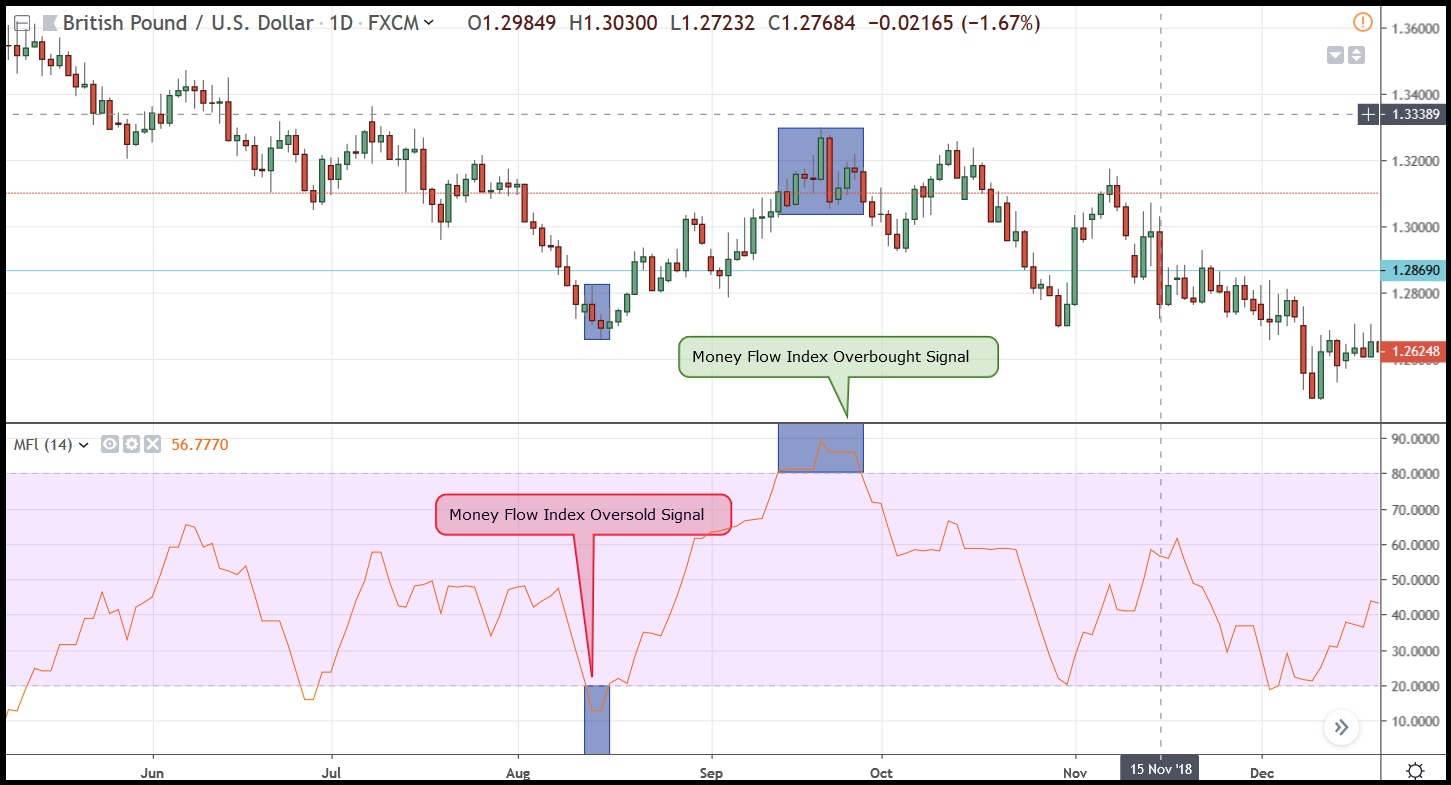
The Money Flow Index (MFI) is often described as the "Volume-Weighted RSI." Moving on a scale from 0 to 100, this momentum oscillator incorporates both price action and trading volume to measure the speed and intensity of money flowing into or out of an asset (typically over a 14-period window). By weighting momentum with volume, it exposes overextended conditions and institutional accumulation or distribution.
🔴 The Red Zone (Above 80 / Overbought)
The Meaning: The MFI line travels near the top of the indicator, climbing above 80. This shows that the market has experienced an intense influx of buying volume, pushing the asset into "Overbought" territory. The Move: Exercise caution. The upward move is stretched, and institutional buying power may be nearing exhaustion. Prepare to lock in profits or look for short setups when the MFI line hooks back below 80.
🟡 The Yellow Zone (20 to 80 / Neutral Range)
The Meaning: The MFI line moves inside the middle channel between 20 and 80, oscillating around the central 50 line. The Move: Hold and wait. The flow of money is balanced, and the market is moving within standard statistical limits. There is no structural momentum extreme to trade until the line approaches the outer bands.
🟢 The Green Zone (Below 20 / Oversold)
The Meaning: The MFI line drops near the bottom of the indicator, sinking below 20. This reveals that aggressive selling volume has heavily battered the asset, driving it into "Oversold" territory. The Move: Get ready. Panic selling is overextended. Watch for the MFI line to turn upward and cross back above 20 as your signal that buyers are stepping back in for a value bounce.
🔍 Two Simple Signals to Watch
1. The Institutional Divergence (Hidden Reversals)
Because MFI factors in trading volume, it catches momentum shifts that standard price-only indicators miss.
- The Logic: A Bearish Divergence occurs when the price chart makes a higher high, but MFI prints a lower high—showing that higher prices are being driven by shrinking volume. A Bullish Divergence happens when the price chart makes a lower low, but MFI prints a higher low—revealing that smart money is quietly accumulating shares on high volume.
2. The Threshold Crossover Exit
Never open a trade the moment MFI enters an extreme zone; wait for it to exit.
- The Logic: In strong trends, MFI can remain above 80 or below 20 for an extended period. The actual actionable entry signal triggers only when MFI hooks and crosses back through the boundary line: hooking above 20 confirms a buy, while hooking below 80 confirms a sell.
💡 The Simple Secret
Think of the MFI as RSI with a volume lie detector. If a stock's price jumps on paper thin volume, standard RSI might spike into overbought territory, giving a misleading signal. MFI multiplies that price change by actual traded volume—if the money isn't truly behind the move, the line won't budge, keeping you safe from false breakouts.

You Don't Look Tilted. You Trade Tilted
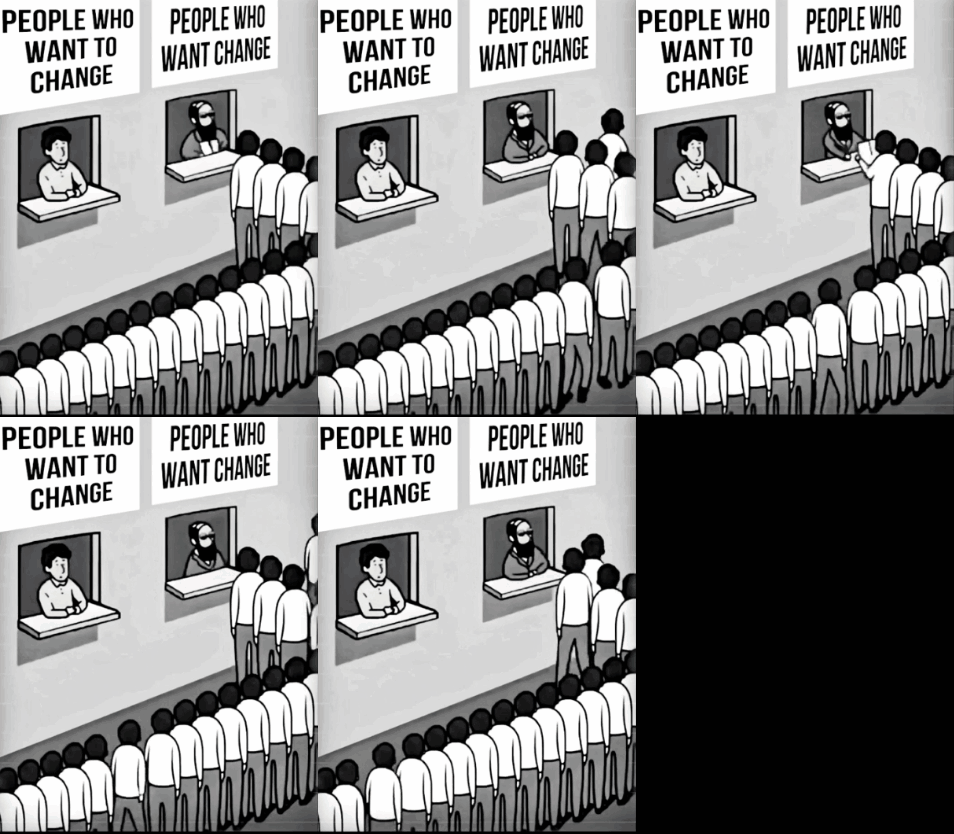
Tilt doesn't always look like rage.
Sometimes it looks like focus.
You're sitting upright.
Charts are clean.
Coffee beside you.
You're watching every candle like it's your job.
And you feel completely in control.
Except...
Your normal 1% risk has quietly become 1.5%.
You're entering faster than usual.
You're taking setups you'd normally reject.
Your stop suddenly feels "too tight."
One rule gets bent.
Then another.
But if someone asked, "Are you tilted?"
You'd probably say:
"No. I'm locked in."
That's what makes invisible tilt so dangerous.
The emotional trader isn't always the one yelling at the screen.
Sometimes it's the trader who looks incredibly serious while making increasingly irrational decisions.
I once saw a trader take three losses in the morning.
Nothing dramatic happened.
He didn't slam his desk.
Didn't start revenge trading immediately.
He simply became more aggressive.
His entries got faster.
His size crept up.
His standards became flexible.
By lunchtime, he was taking trades he would've laughed at two hours earlier.
He genuinely believed he was focused.
The numbers told a different story.
That's the thing about tilt:
Your behavior can reveal it before your emotions do.
You don't always feel angry.
You might feel determined.
You might feel unusually sharp.
You might even feel like you're finally "dialed in."
So don't only monitor your emotions.
Monitor your behavior.
Ask yourself:
Am I trading faster than normal?
Am I risking more than normal?
Am I bending rules I usually respect?
Am I suddenly desperate to make something happen?
Those questions can expose tilt long before you admit you're frustrated.
And here's the uncomfortable part:
Sometimes the most dangerous trader isn't the angry one.
It's the trader who has convinced himself that his emotional state is completely under control.
Your feelings can lie.
Your trading data usually doesn't.
So if your behavior starts looking different, don't wait until you feel tilted before doing something about it.
Step away.
Reduce size.
Take a break.
Come back when your decisions look like your normal decisions again.
Because emotional control isn't about never getting tilted.
It's about noticing when your behavior has changed...
before the market charges you for it.