SpaceX Overtakes Amazon
....................................................................................................................



Good Morning,
All eyes are on the Fed this morning as Wall Street prepares for a new era.
We’re kicking off Wednesday with green on the screens. Nasdaq futures are rebounding 0.8%, while the S&P 500 is up 0.3%, and the Dow is holding steady near its record highs. Tech is trying to shake off recent weakness, but the entire market is in a holding pattern ahead of today's massive Federal Reserve rate decision.
It's Kevin Warsh’s first big day in the hot seat. The Fed is widely expected to keep interest rates steady today, making this meeting all about the tone set by the new Chairman. Because recent inflation numbers have been sticky and the job market remains solid, rate cuts are completely off the table. Investors are hyper-focused on Warsh's press conference to see if he will hint at rate hikes later this year if the economy stays too hot.
The 14-point peace blueprint is officially out. Giving the bulls some much-needed backup, the leaked text of the 14-point U.S.-Iran interim peace memorandum hit the wires last night. Traders are meticulously scanning the details to see how fast the blockaded Strait of Hormuz will be cleared for oil traffic. If the formal signing ceremony goes off without a hitch this Friday, a massive amount of energy-driven inflation pressure could suddenly vanish from the Fed's radar.
It's a high-stakes "Fed Wednesday." Tech wants to run on peace optimism, but Chairman Warsh holds the ultimate remote control for the market today.

🚀 SpaceX Surpasses Amazon in Valuation After Post-IPO Surge
SpaceX (SPCX) shares popped another 4% in Wednesday's premarket trading, extending a spectacular run that has seen the stock surge roughly 50% since its historic Friday debut. The relentless buying officially pushed Elon Musk’s space and AI conglomerate past Amazon in total market capitalization during Tuesday's session, cementing its place among the largest megacap enterprises in the world
🦅 Fed Expected to Hold Rates Steady in First Policy Meeting Under Chair Kevin Warsh
Kevin Warsh is set to preside over his first interest rate-setting meeting as Federal Reserve Chair on Wednesday, with the central bank widely expected to hold interest rates steady. Fed watchers are hyper-focused on Warsh's commentary to gauge his credibility and policy stance as the committee balances hot trailing inflation data against the recent diplomatic breakthrough in the Middle East.
🛢️ Oil Tumbles Below $80 per Barrel for First Time Since March
International benchmark Brent crude briefly dipped below the critical $80 threshold on Tuesday—hitting an intraday low of $79.96—while U.S. WTI crude fell below $78. This marks the first time oil has traded at these levels since early March, effectively erasing the massive geopolitical premium that drove prices toward $120 following the outbreak of the war.
🥇 Gold Consolidates Gains as Washington and Tehran Prepare to Finalize Interim Accord
Bullion held onto its recent recovery gains as global markets anticipate the formal signing of the interim U.S.-Iran peace agreement. The expected pact is providing strong structural support across precious metals by offering a clear path to easing global supply-chain bottlenecks and lowering energy-driven inflationary pressures.
💵 Dollar Turns Defensive Ahead of High-Stakes Federal Reserve Decision
The U.S. dollar eased slightly on Wednesday morning as optimism surrounding the Middle East peace deal fueled a broader return to risk assets, dampening safe-haven demand. Meanwhile, the Japanese yen remains stuck deep in the official "red zone" for currency intervention, showing little reaction to the Bank of Japan's well-telegraphed rate hike on Tuesday.
🏦 Central Banks Re-Shore Gold Reserves to Buffer Against Geopolitical Risks
A new World Gold Council survey reveals that global central banks are actively planning to increase their gold reserves over the next year. Amid an increasingly fractured macroeconomic landscape, a growing number of reserve banks are choosing to repatriate their bullion holdings to domestic vaults or diversify overseas storage to insulate against sovereign risks.
₿ Bitcoin Tops $67K on Peace News, but Derivatives Spark "Bull Trap" Fears
Bitcoin briefly cleared the $67,000 threshold, riding the wave of macro optimism following President Trump's late Sunday ceasefire announcement. However, underlying derivatives metrics indicate deep-seated skepticism among crypto traders, with heavy hedging activity raising warning flags that the sudden breakout could turn into a near-term bull trap.

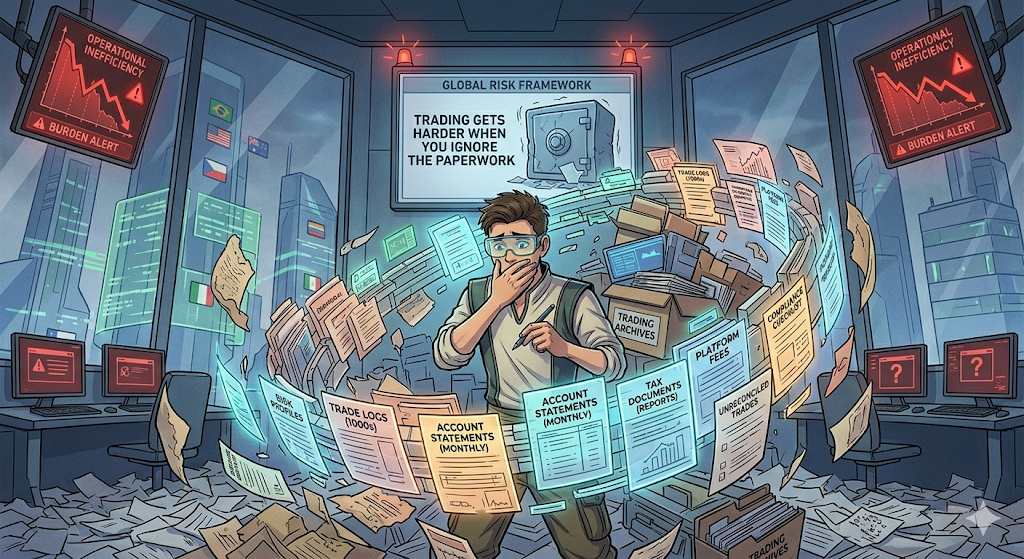
Trading Gets Harder When You Ignore the Paperwork
Most traders focus on charts, setups, and execution.
Very few think about records.
Until they have to.
Account statements. Trade logs. Tax documents. Platform reports. What starts as a few trades can quickly turn into hundreds of transactions that need to be tracked and explained.
That’s where the burden shows up.
When records are incomplete, simple tasks become stressful. You spend hours trying to reconstruct trades, calculate results, or answer compliance questions.
The problem isn’t trading.
It’s the lack of organization around it.
Strong traders treat recordkeeping as part of the process. They keep trade journals updated. They save statements. They review performance regularly instead of scrambling later.
Because good decisions need good data.
When your records are clear, everything else becomes easier. You understand your results better. You spot patterns faster. You spend less time fixing avoidable mistakes.
Some traders like learning about the parts of trading that happen away from the charts but still affect long-term success.
If that’s you, you can explore a few market reads here:

The Flag Pattern
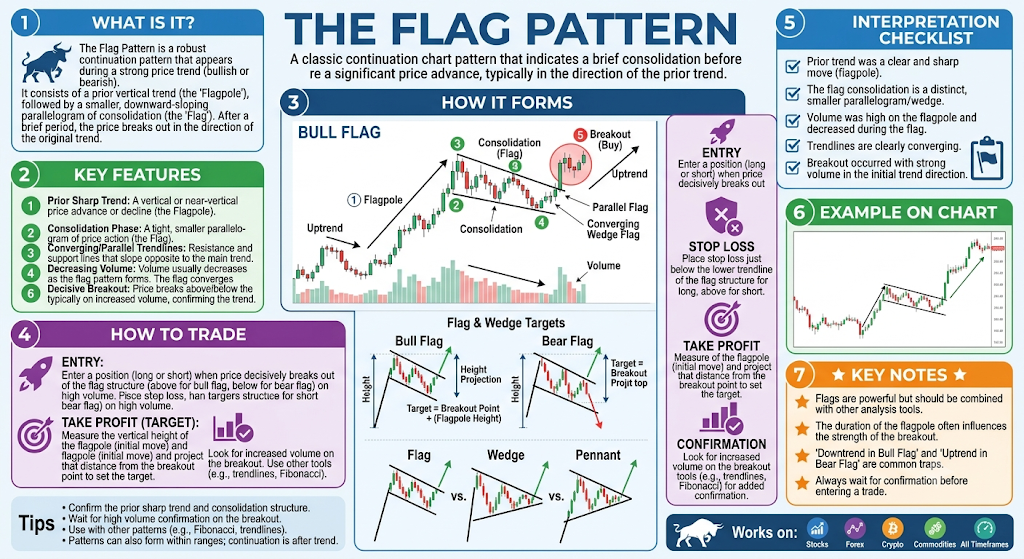
The Flag (often called a Bull Flag or Bear Flag) is a short-term continuation pattern that looks exactly like a flag on a pole. It forms when a sharp, vertical price move (the flagpole) is followed by a tight, sloping pause (the flag). It signals that the market is just taking a quick breather before slamming back into the main trend.
🔴 The Red Zone (The Flagpole)
The Meaning: Price shoots straight up or straight down in a massive, vertical blast. This is driven by heavy aggressive trading and intense momentum.
The Move: Do not chase it here. The price is moving too fast, and buying at the absolute tip of the pole puts you at risk of getting caught in the immediate pullback.
🟡 The Yellow Zone (The Flag)
The Meaning: The price suddenly halts its rapid climb and drifts sideways or slightly backward inside a narrow, parallel channel.
The Move: Watch closely. This is the "flag" portion of the pattern. It represents traders taking quick profits while new buyers step in to hold the floor. As long as this channel stays tight and orderly, the pattern is healthy.
🟢 The Green Zone (The Breakout)
The Meaning: The price violently snaps out of the flag channel and blasts past the boundary in the direction of the original flagpole.
The Move: Go! Breaking out of the flag is your official trigger to enter the trade. It proves that the brief rest period is over and the main trend has officially restarted.
🔍 Two Simple Signals to Watch
1. The Flag Tilt
Pay close attention to which way the flag channel angles while the market rests.
- The Logic: In a strong upward trend (Bull Flag), the flag should tilt slightly downward, against the main move. If it tilts upward, it means buyers are trying too hard too early, which usually causes the pattern to fail.
2. The Clean Pole
Look at how clean the initial vertical run was before the flag formed.
- The Logic: The most reliable flags come from straight, near-vertical flagpoles with very little hesitation. A messy, choppy staircase move up does not make a good flagpole and rarely results in an explosive continuation.
💡 The Simple Secret
Think of the Flag pattern as a runner pausing for a quick sip of water. They aren't turning around; they are just catching their breath before sprinting again. To estimate how far the price will run after the green light breakout, measure the exact height of the original flagpole—the price will very often match that exact same distance on its next leg up.

If I Don’t Look at It, Maybe It’ll Fix Itself
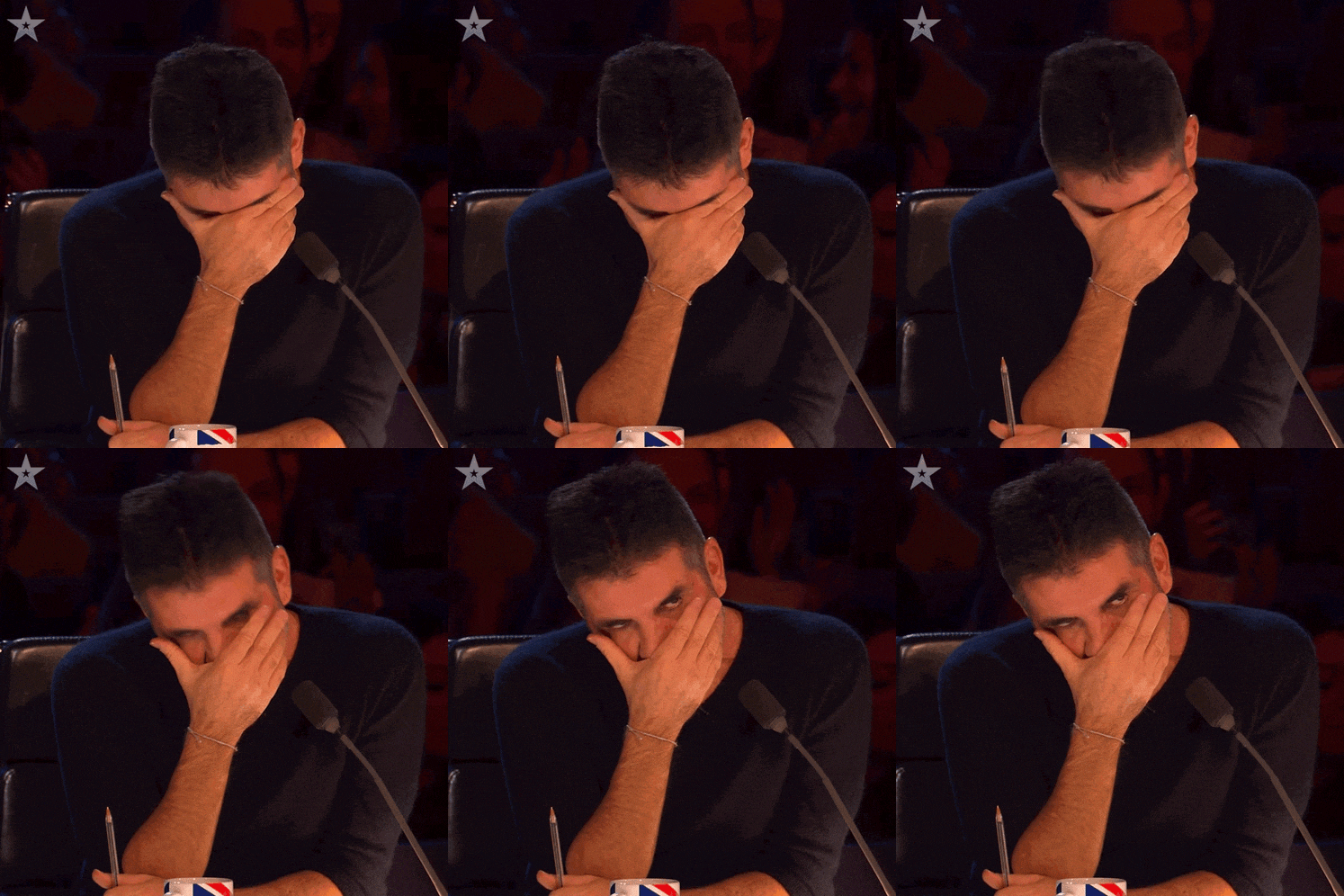
Every trader knows this feeling.
The trade is going badly.
Not catastrophically.
Not yet.
But badly enough that opening the platform feels uncomfortable 😬
So instead of making a decision...
You make an escape.
You stop checking the chart.
You close the app.
You tell yourself you'll "look at it later."
Maybe the market just needs time.
Maybe it'll recover.
Maybe tomorrow will look different.
And just like that, a trading decision quietly becomes an avoidance strategy.
This is the Passive Loss Acceptance.
It's one of the sneakiest habits in trading because it doesn't feel like you're doing anything wrong.
You're not revenge trading.
You're not moving stops.
You're not adding to the position.
You're just... not looking.
But here's the truth:
IGNORING A POSITION IS STILL A POSITION MANAGEMENT DECISION.
The market doesn't pause because you're uncomfortable.
Price keeps moving.
Risk keeps existing.
The trade keeps developing.
Whether you're watching it or not.
And what's fascinating is that most traders would never admit they're avoiding the trade.
They'll say:
"I'm giving it room."
"I'm letting it play out."
"I'm being patient."
Sometimes that's true.
But sometimes?
You're not being patient.
You're being absent.
There's a difference.
Patience is staying committed to a plan.
Avoidance is hoping reality changes before you have to face it.
One trader I knew had a habit that will sound painfully familiar to some readers.
Whenever a trade went deeply against him, he'd stop opening his broker app.
Not for an hour.
For days.
His logic was simple:
"If I don't look at it, I won't panic."
What actually happened?
The loss kept growing while he protected his emotions from seeing it.
The position wasn't being managed.
It was being abandoned.
And that's what makes this trap so dangerous.
Because emotionally, ignoring feels easier than accepting.
Accepting the loss means admitting:
- The setup failed
- The market disagreed
- The trade is over
Ignoring lets hope stay alive.
And hope can be incredibly persuasive when money is involved.
The market teaches a difficult lesson:
Unmade decisions don't disappear.
They accumulate.
Sooner or later, every position demands an answer.
So here's a question worth asking the next time you're tempted to stop looking:
"Am I following my plan... or am I avoiding my feelings?"
Be brutally honest.
Because the goal of trading isn't to avoid discomfort.
It's to make good decisions despite discomfort.
And sometimes the most expensive trade in your account isn't the losing position.
It's the decision you've been refusing to make for three days .