Oil Prices Surge Again
....................................................................................................................


Good morning,
We’re starting Wednesday with a massive sea of red. Following a stunning announcement from President Trump at the NATO summit in Turkey that the hard-fought Iran ceasefire is officially “over,” stock futures are plunging. Dow futures have plummeted 628 points (down 1.2%), while Nasdaq futures are sinking 1.3% and the S&P 500 is tracking 0.9% lower. The complacency that lifted markets to record highs has vanished overnight.
The U.S. launched powerful airstrikes after ships were hit. The sudden collapse of the truce follows a massive escalation. Over the mandatory shipping lane of the Strait of Hormuz, three commercial vessels were attacked. U.S. Central Command immediately retaliated on Tuesday night with a series of powerful military strikes inside Iran, right after the U.S. Treasury Department revoked Iran's global oil-selling license. Iran's foreign ministry quickly fired back, calling the strikes a "gross violation" of last month's peace agreement and vowing a fierce defense.
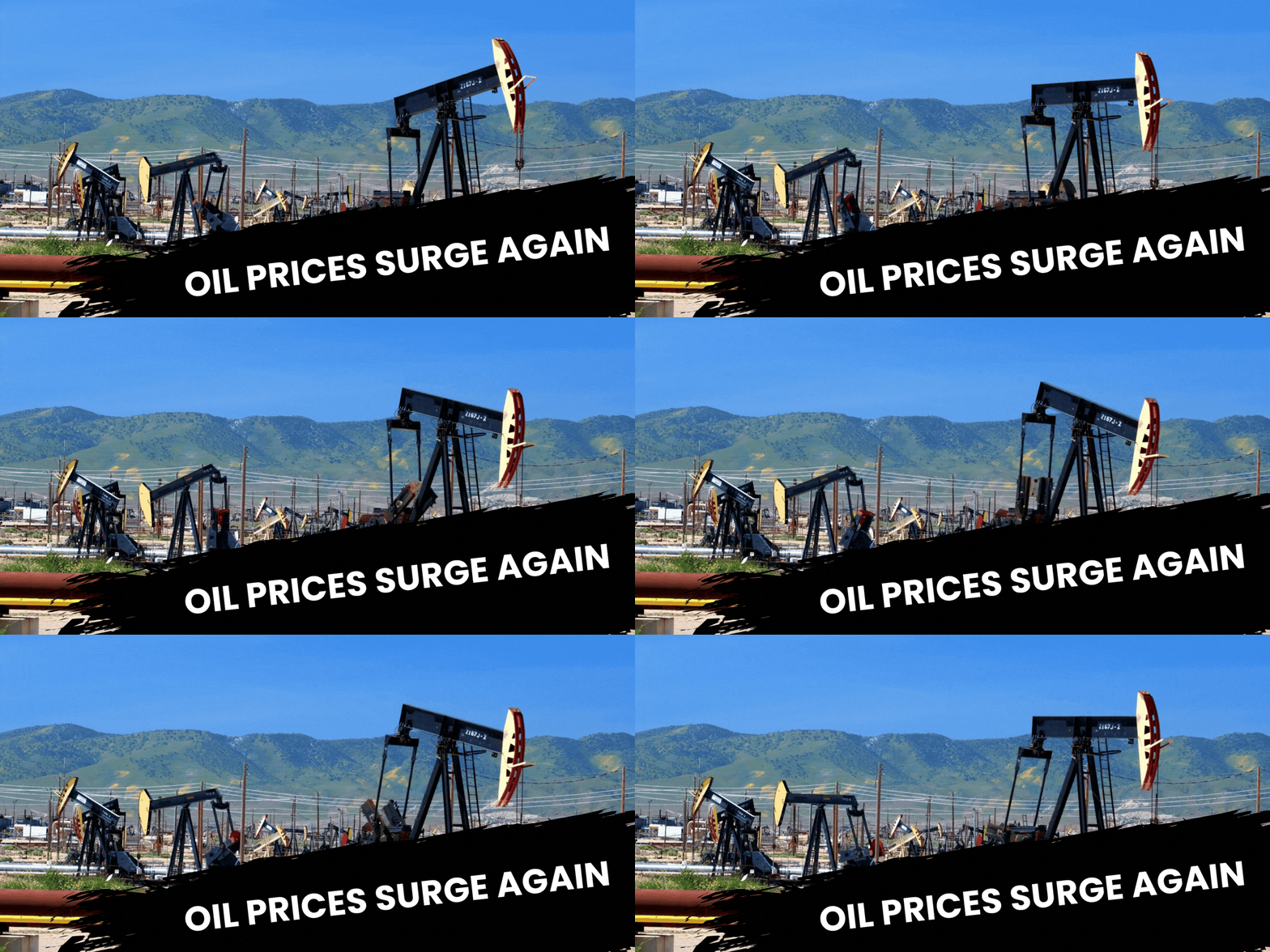
Oil prices are skyrocketing, crushing travel stocks. Energy markets exploded on the news of open warfare returning to the Gulf. Brent crude surged over 6% to $78.61 a barrel, while U.S. crude jumped to $74.74. This violent spike in fuel costs sent an immediate shockwave through global travel companies, with United, Delta, Southwest, and Carnival Cruise line all sinking more than 3% in early premarket trading.
Global markets are reeling, and South Korea enters a bear market. The panic swept through international bourses overnight. Europe’s regional benchmark tumbled 1.6%, while Asia-Pacific markets faced a total bloodbath. Japan's Nikkei sank over 2%, and South Korea’s Kospi crashed 5.35%, officially falling into a bear market. Only Hong Kong managed to buck the trend, climbing 3.1% in choppy trading.
The Fed drops a massive wildcard this afternoon. As if a geopolitical crisis weren't enough, Wall Street has to face the Federal Reserve at 2:00 p.m. ET. The central bank is releasing the minutes from June's meeting. Because new Chairman Kevin Warsh was incredibly vague during his first press conference, investors are bracing for these minutes to reveal a highly aggressive, hawkish tone. With oil spiking and the war back on, any hint that the Fed wants to raise interest rates will rub massive salt in the market's wounds.

🛢️ Oil Prices Jump 5% as President Trump Abruptly Scraps Iran Pact
International crude benchmarks surged to a two-week high on Wednesday morning, with Brent crude climbing over 5% to touch $77.98 a barrel. The aggressive price spike follows an official declaration from President Trump ending the interim de-escalation memorandum of understanding with Iran. The sudden diplomatic breakdown immediately reignited deep supply disruption fears across the Middle East, amid reports of fresh drone attacks on commercial tankers and retaliatory strikes hitting military facilities in Bahrain.
🚀 SpaceX Enters "Post-Honeymoon Faith Phase" as Shares Slump Below $150
SpaceX (SPCX) stock tumbled nearly 7% to log its first-ever close below the critical $150 threshold, marking a volatile 16th day of public trading on the Nasdaq. The sharp contraction occurred despite a massive wave of fresh, overwhelmingly bullish Wall Street coverage initiating coverage on Elon Musk's multi-faceted aerospace, AI, and telecom empire, signaling the end of early listing euphoria as long-term valuation metrics take hold.
🌏 South Korean Equities Edge Closer to Technical Bear Market Amid Broad Tech Flush
South Korea's KOSPI index extended its downward spiral on Wednesday, bringing its aggregate retreat from recent highs to a painful 20%. The sharp drawdown leaves the regional technology benchmark on the absolute precipice of a technical bear market, as institutional portfolio managers rapidly downsize infrastructure allocations to reassess the long-term sustainability of global AI demand.
💻 Intel Tumbles Nearly 10% in Deep Profit-Taking Retrenchment
Shares of Intel (INTC) plunged 9.66% on Tuesday to settle at $110.39 apiece as macro participants aggressively pulled cash out of the stock. Fixed-income and equity desks noted that the deep single-session move was largely driven by localized profit-taking and technical sideways trading, aggravated by a quiet data environment lacking fresh industry developments to support high-multiple buying pressure.
📉 Global Hardware Giants Drag Semiconductor Memory Space Into a Bear Market
The high-flying AI memory chip trade suffered an absolute structural breakdown as industry titans Micron, Samsung Electronics, and SK Hynix fell more than 20% from their cycle peaks. The swift slide into bear market territory for the broader hardware sector—highlighted by a deep slump in the Roundhill Memory ETF (DRAM)—was triggered as Samsung's record earnings report failed to soothe anxious institutional asset managers.
🎮 GameStop Edges Higher After Shareholders Authorize Key Share Capital Expansion
GameStop (GME) shares climbed 0.5% in after-hours trading following the conclusion of its 2026 Annual Meeting. Retail and institutional investors approved all management proposals, including a critical charter amendment to sharply increase the number of authorized Class A common shares intended to provide direct equity backing for the company's proposed acquisition of digital marketplace platform eBay.
🥇 Gold Waves Between Gains and Losses as Geopolitical Escalation Battles Fed Outlook
Spot gold fluctuated on Wednesday morning, recovering 0.5% to stabilize around $4,125.59 an ounce after collapsing to its lowest absolute level since July 2 earlier in the session. While fresh defensive U.S. strikes against Iranian positions have driven up crude oil and strengthened the safe-haven dollar, bullion's near-term recovery remains highly capped as investors brace for hawkish policy signals in the impending release of the Federal Reserve's June minutes.

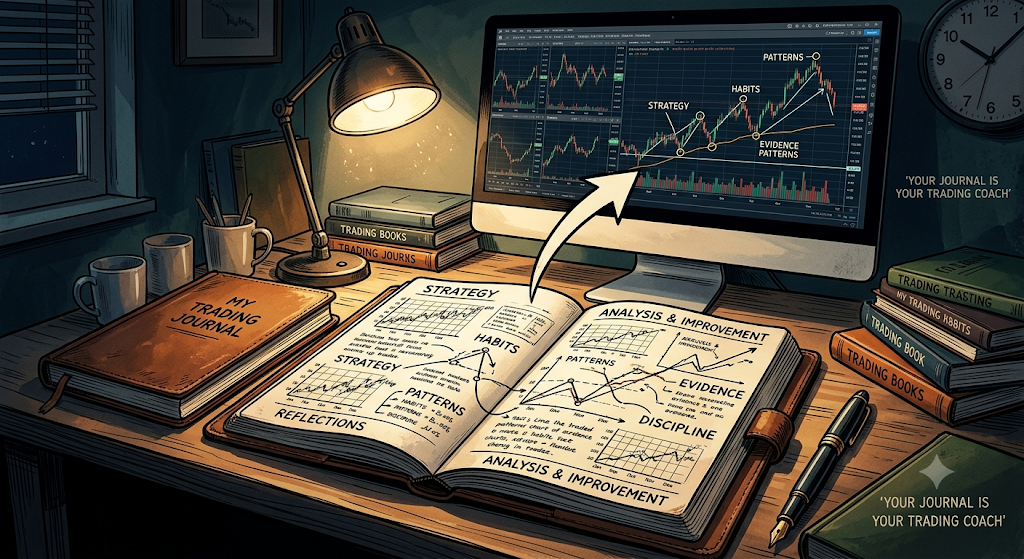
Your Best Trading Coach Might Be Your Journal
Most traders remember the big wins.
They remember the painful losses too.
But they forget everything in between.
That's the problem.
Without a trading journal, it's easy to believe you're improving when you're actually repeating the same mistakes. You rely on memory instead of evidence. Over time, patterns get missed and bad habits become normal.
Strong traders write things down.
Not just the entry and exit, but why they took the trade, how they felt, what they did well, and what they would change next time.
The goal isn't to create more work.
It's to create feedback.
A journal shows you things the chart can't. It reveals emotional habits, recurring mistakes, and the decisions that consistently lead to better results.
When you review your trades honestly, improvement stops being a guess.
It becomes measurable.
Learning from your own trades is powerful, but so is learning from different market perspectives.
You can explore a few market newsletters here:

On-Balance Volume (OBV)
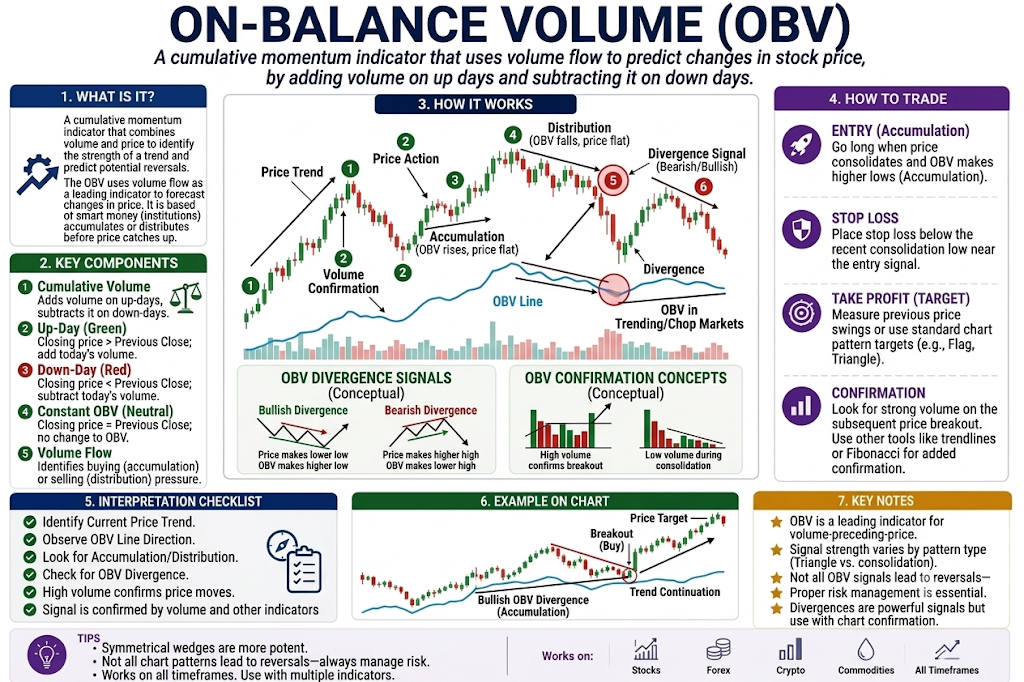
OBV (On-Balance Volume) is a momentum indicator that uses trading volume to predict major price changes before they actually happen. It acts like a cumulative scoreboard: if the price closes higher for the day, all of that day's volume is added to the OBV running total. If the price closes lower, that volume is subtracted. It shows you whether the "smart money" is quietly buying or selling behind the scenes.
🔴 The Red Zone (OBV Drops Ahead of Price)
The Meaning: The price of the asset is holding steady or even creeping up, but the OBV line turns downward and starts making lower lows.
The Move: Caution or exit. This is a severe warning signal called bearish divergence. It proves that institutional investors are quietly dumping their shares on high volume, while retail traders keep the price afloat on weak volume. The floor is about to give way.
🟡 The Yellow Zone (OBV and Price in Sync)
The Meaning: The OBV line and the price line are moving smoothly in the exact same direction—both hitting higher highs or both hitting lower lows.
The Move: Hold. The market is in total equilibrium. The current trend is fully backed by the trading volume, meaning there are no hidden surprises brewing.
🟢 The Green Zone (OBV Breaks Out Ahead of Price)
The Meaning: The price of the asset is trapped sideways in a boring consolidation pattern, but the OBV line suddenly breaks out to a fresh new high.
The Move: Go! This is a massive bullish divergence signal. It reveals that large institutional players are aggressively accumulating huge blocks of the asset without letting the price spike yet. A major upward price breakout is imminent.
🔍 Two Simple Signals to Watch
1. The Key Resistance Break
Just like standard price charts, you can draw horizontal support floors and resistance ceilings directly onto the OBV indicator line.
- The Logic: If the OBV line shatters its horizontal resistance ceiling before the price chart does, treat it as an early bird buy signal. Volume always precedes price; the money has already entered the building, and the price will catch up shortly.
2. The Climax Peak (The Trap)
Sometimes during a massive, vertical price run, the OBV line will spike out to an absolute, uncharacteristic vertical cliff.
- The Logic: This represents a volume climax. It means the last remaining buyers have piled in all at once out of intense fear of missing out (FOMO). When OBV spikes like a needle, it usually signals that the buying power is completely exhausted, and a sharp reversal is coming.
💡 The Simple Secret
Think of OBV as a steam engine. The price of the stock is the train, but the volume tracking inside the OBV is the actual steam pressure in the boiler. The train cannot climb a hill without steam. By watching whether the OBV running total is growing or shrinking, you can easily tell if the market has the true horsepower required to sustain its current direction.

The Market Isn't Running Away.
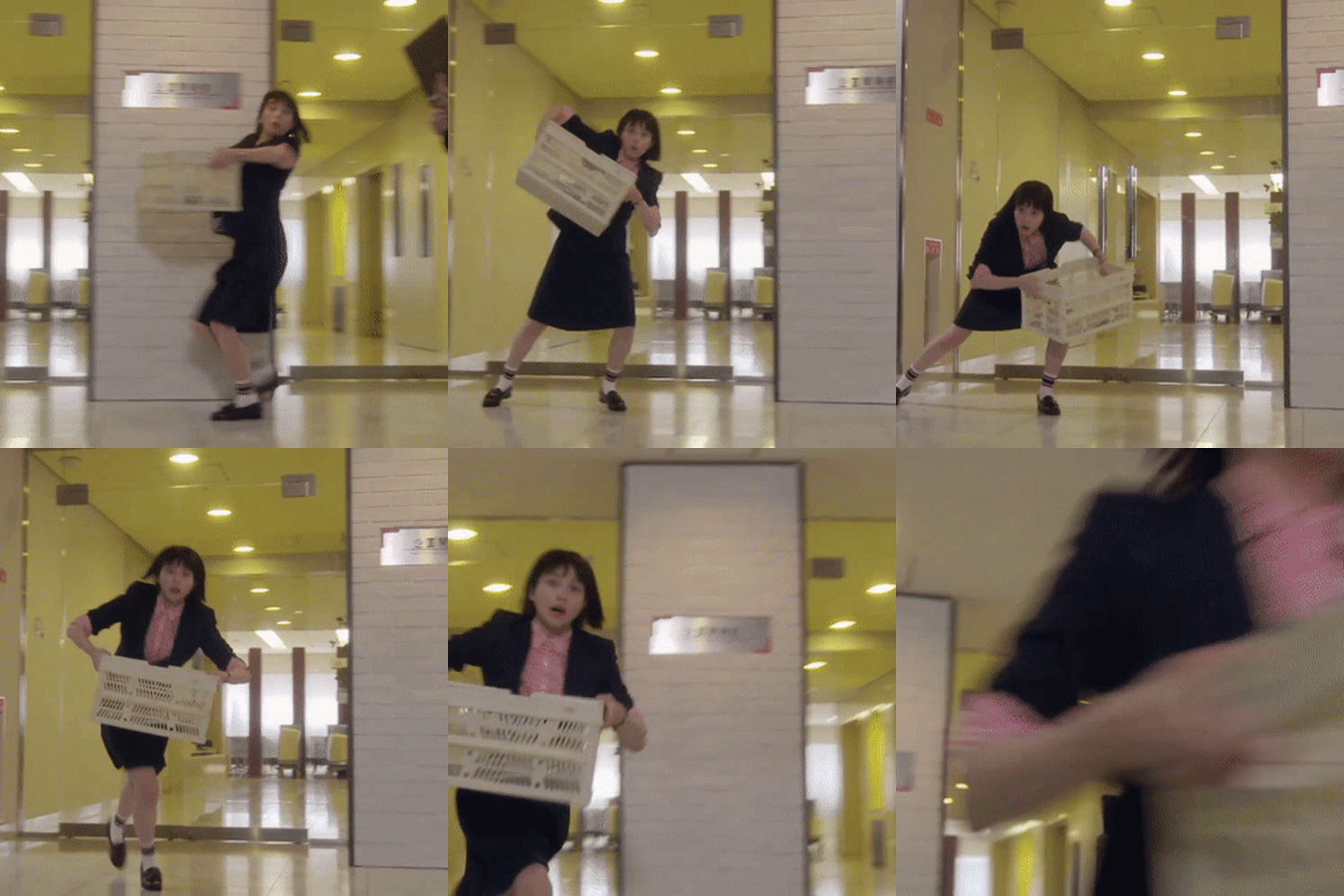
Watch a new trader for an hour and you'll notice something.
They're always in a hurry.
The chart twitches...
Click.
A candle closes...
Click.
Someone posts breaking news...
Click.
It's as if every decision has to be made in the next five seconds or the opportunity will disappear forever.
Where does that come from?
Movies.
Social media.
The idea that great traders have lightning-fast reflexes and somehow "see it before everyone else."
So people start believing that speed is an edge.
It isn't.
In fact, speed is responsible for far more bad trades than missed trades.
Think about your last few losing positions.
How many happened because you waited an extra minute?
Probably not many.
Now ask yourself how many happened because you entered before confirmation...
...before your checklist...
...before the candle closed...
...before you took one deep breath.
Exactly.
The market rarely punishes patience.
It regularly punishes impatience.
One trader described his biggest weakness perfectly.
He said, "The moment I think I've found a setup, I feel like I have to get in immediately before it leaves me."
That wasn't a trading problem.
That was an anxiety problem.
He wasn't chasing price.
He was chasing relief.
Because entering the trade ended the uncomfortable feeling of waiting.
That's something most people never realize.
Sometimes we click not because the setup is ready...
...but because we're tired of feeling uncertain.
The trade becomes an escape from indecision.
Unfortunately, uncertainty doesn't disappear after you enter.
It just changes form.
Now instead of wondering whether to enter...
You're wondering whether to exit.
Professional traders have something beginners often don't:
Comfort with waiting.
They understand that if a setup is truly high quality, it usually survives an extra thirty seconds of thought.
A good trade doesn't become a bad trade because you took one final look before pressing the button.
Try this tomorrow.
Before every entry, force yourself to pause for just ten seconds.
Not to overthink.
Just to ask one question:
"Am I reacting... or am I executing?"
It's amazing how many mediocre trades fall apart during those ten seconds.
Not because the market changed.
Because your emotions settled.
And here's the irony.
The traders everyone thinks are the fastest...
...are often the ones making the calmest decisions.
They simply spent years learning that in trading, there's a huge difference between being quick... and being rushed.