Year-End Stocks Rally
....................................................................................................................

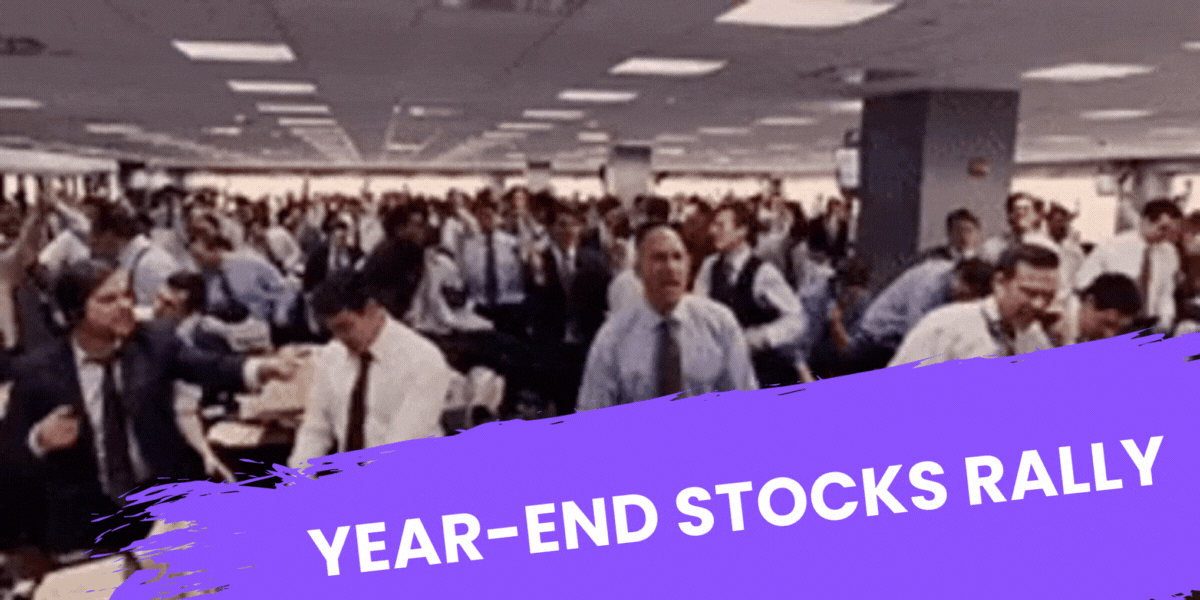

We’re officially in the last trading week of the year, and Wall Street is approaching it the way strong markets usually do — quietly, confidently, and without panic.
Stock futures are barely moving after the S&P 500 pushed to fresh record territory, setting the tone for the final stretch of a powerful 2025. With benchmarks already sitting near all-time highs and the Santa Claus rally in full swing, the market is entering year-end mode with confidence — not urgency.
This has been a year where dips were bought, patience was rewarded, and momentum quietly did the heavy lifting. Now, with the economic calendar mostly clear and only the Fed’s December minutes left to parse, Wall Street’s focus shifts from chasing headlines to protecting gains.
The playbook into year-end is simple: let strength persist, keep risk measured, and allow the tape to close out a standout year on its own terms.

📈 Stocks Sit Near Record Highs as ‘Santa Claus Rally’ Builds Ahead of 2026
Major U.S. indexes are trading close to all-time highs as year-end momentum builds, with investors positioning for a potential Santa Claus rally and looking ahead to 2026 market catalysts.
📊 S&P 500 Eyes 7,000 Mark as Investors Look for Upbeat End to Strong 2025
The S&P 500 is closing in on the 7,000 milestone for the first time ever as markets head toward the year’s end, buoyed by gains across multiple sectors and strong overall performance in 2025.
🇪🇺 European Markets Trade Mixed: STOXX 600, FTSE, DAX, CAC 40 in Focus
European stocks saw a mixed session as investors navigate holiday-light volumes, geopolitical risks, and earnings data, with major indexes like the STOXX 600 and FTSE 100 under close watch for direction.
🥈 Silver Crosses $80; Platinum Hits Record High Amid Precious Metals Rally
Silver surged past the $80/oz milestone for the first time ever, and platinum also reached unprecedented highs as precious metals benefited from safe-haven demand, supply concerns, and rate-cut expectations.
📉 Asian Shares Mixed as Quiet Holiday Trading Continues
Asian stock markets traded unevenly in a quiet post-holiday session, even as gold remained close to record highs, reflecting ongoing investor interest in safe havens amid thin liquidity.
₿ Bitcoin Needs a 6–24% Rally to Reclaim Key Levels
Crypto analysts say Bitcoin must climb between 6% and 24% from current levels to breach major resistance zones and regain bullish momentum — a critical move if the market is to shake off persistent fear sentiment.
🛢️ Oil Gains as Investors Weigh Middle East Tensions and Supply Risks
Crude prices climbed as geopolitical tensions in the Middle East and potential supply disruptions kept energy markets volatile, lifting both Brent and WTI futures amid cautious risk sentiment.

Fix the Thinking Before Chasing the Trade
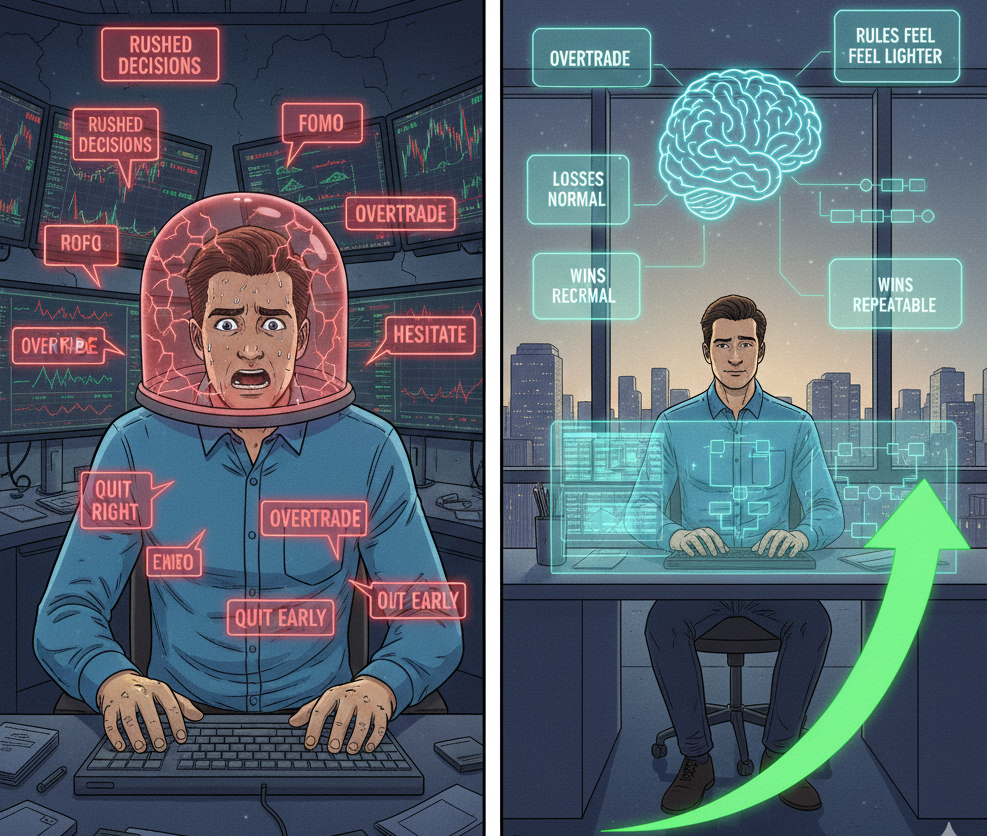
Most trading mistakes start before the order.
They start in the head. Rushed decisions. Fear of missing out. The need to be right.
Those habits turn setups into stress and plans into guesses.
When your thinking stays sloppy, no strategy saves you. You overtrade. You hesitate.
You quit too early.
Clean thinking creates calm execution. Rules feel lighter. Losses feel normal.
Wins feel repeatable.
Trading rewards preparation, not urgency.
Fix the mindset first. The trades follow.
If you want steady input that sharpens how you think before you place trades, these newsletters help. They reinforce structure, patience, and decision discipline through daily exposure.

Keltner Channel: The "If / Then" Strategy
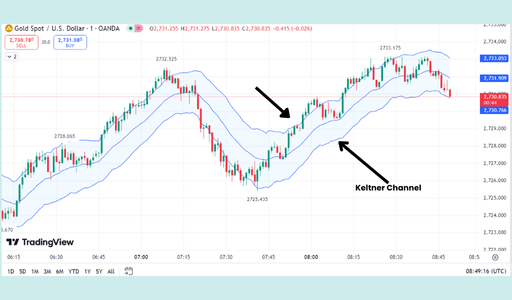
Keltner Channels act as a volatility-adjusted "map" for price action. By using the Average True Range (ATR), they provide a smoother, more reliable channel than standard deviation-based tools.
🛠️ The Strategy Logic
Use these logical triggers to determine your market entry and exit points:
- IF: The price closes decisively above the Upper Channel line...
- THEN: A high-conviction momentum breakout is occurring. This is not the time to sell; it is a signal that a strong uptrend has likely begun.
- IF: The price is in an uptrend but dips to touch the Middle Line (EMA)...
- THEN: This is your "Value Zone." Look for a bounce here to enter a long position. This allows you to join the trend at a better price rather than "chasing" the top.
- IF: The price closes decisively below the Lower Channel line...
- THEN: Bearish volatility is expanding. This indicates a significant breakdown. For many trend followers, this is an automatic "exit" signal for long positions or an entry signal for short positions.
- IF: The price is riding the Upper Channel and then closes back inside the Middle Line...
- THEN: The trend is losing its "velocity." This is often a signal to take partial profits or move your stop-loss closer to the current price.
- IF: The Channels become very narrow and flat (The Squeeze)...
- THEN: Volatility has reached a "low" and energy is being stored. Expect a massive breakout soon. Prepare to trade in whichever direction the price finally breaks the channel boundaries.
💡 Pro Tip
The "Trend Filter": To avoid being "chopped up" in a sideways market, only take Buy signals (Upper Channel breakouts or Middle Line bounces) when the slope of the Middle Line is clearly pointing up. If the Middle Line is flat or "snaking" sideways, the channels are better used for mean-reversion (selling the top and buying the bottom) rather than trend following.

The Myth of Neutrality

Most traders believe they reset after every trade.
Flat position. Clean slate. Neutral mindset.
That is the story you tell yourself.
In reality, your last trade never fully leaves the room.
A win whispers confidence. Sometimes too much. A loss whispers doubt. Sometimes quietly. Sometimes loud enough to rush you.
You say you are trading the chart in front of you.
But your hand remembers the last stop.
Your eyes remember the last fake breakout. Your patience remembers the last missed move.
This is how bias sneaks in. Not through opinions. Through memory.
You size up a little because the last trade worked.
You hesitate because the last one failed.
You exit early because the previous winner reversed on you.
None of this feels emotional. It feels logical. That is why it is dangerous.
Good traders do not aim for neutrality.
They aim for awareness.
They know bias exists, so they account for it.
They slow down after wins. They simplify after losses. They do not pretend the past is gone.
The last trade always whispers.
Your job is to decide whether you listen.