War Shock Begins
....................................................................................................................



Good morning, traders. Grab your coffee, because we are waking up to a massive geopolitical shock.
The tape is bleeding red this Monday after US and Israeli military strikes on Iran over the weekend sent shockwaves through the global markets. We’re seeing a classic "flight to safety," with gold jumping and oil prices absolutely exploding.
The numbers are ugly: the Nasdaq (NQ) is leading the slide, down 1.7%, while the S&P 500 (ES) and Dow (YM) have both tanked over 1%. Brent crude is the big story, though, screaming 13% higher to hit $80 a barrel.
With Iran being a major OPEC producer and leadership questions swirling after the death of the Supreme Leader, energy volatility is going to be insane today.
This chaos hits just as investors were already questioning the AI rally. Between the Middle East fire and a huge jobs report coming Friday, the "risk-off" sentiment is real.
Keep your stops tight, don't try to catch a falling knife, and follow the live update here to see how the market handles the fallout.

🛢️Oil Jumps 13% Above $82
Brent crude surged 13% to $82+ while WTI crossed $70 as tensions between United States and Iran threatened the Strait of Hormuz. Traders fear supply shocks are just starting.
🤖 Tech Sell-Off Hits Nasdaq Down 4%
The Nasdaq Composite dropped over 4% in February as AI fears shook tech stocks. Some strategists still see the 5% pullback in Nvidia as a buying chance.
💥 Crypto Liquidations Hit $350M
Crypto markets dumped with $350M liquidated as Bitcoin slid to about $66,300 after renewed Iran strike threats. Altcoins led the losses.
🥇 Gold Tops $5,390 on War FearsGold climbed as much as 2.2% to $5,390 as investors rushed to safety amid Middle East conflict. Safe-haven demand is back in full force.
📉 Markets Brace for Strait Shock
Global investors fear a prolonged closure of the Strait of Hormuz could trigger a 1970s-style energy crisis. U.S. futures slid as the conflict’s ripple effects spread.
✈️ Asian Airlines Shares Drop 6% as Oil Spikes
Singapore Airlines fell 6%+ while ANA and JAL lost 4% as fuel costs surged. Energy stocks rose as travel stocks sank.
💵 Dollar Rallies on War Risk
The US Dollar surged while the euro slipped as investors fled to safety after Iran strikes. Higher oil prices boosted safe-haven demand.

Don’t Rewrite the Plan Under Pressure
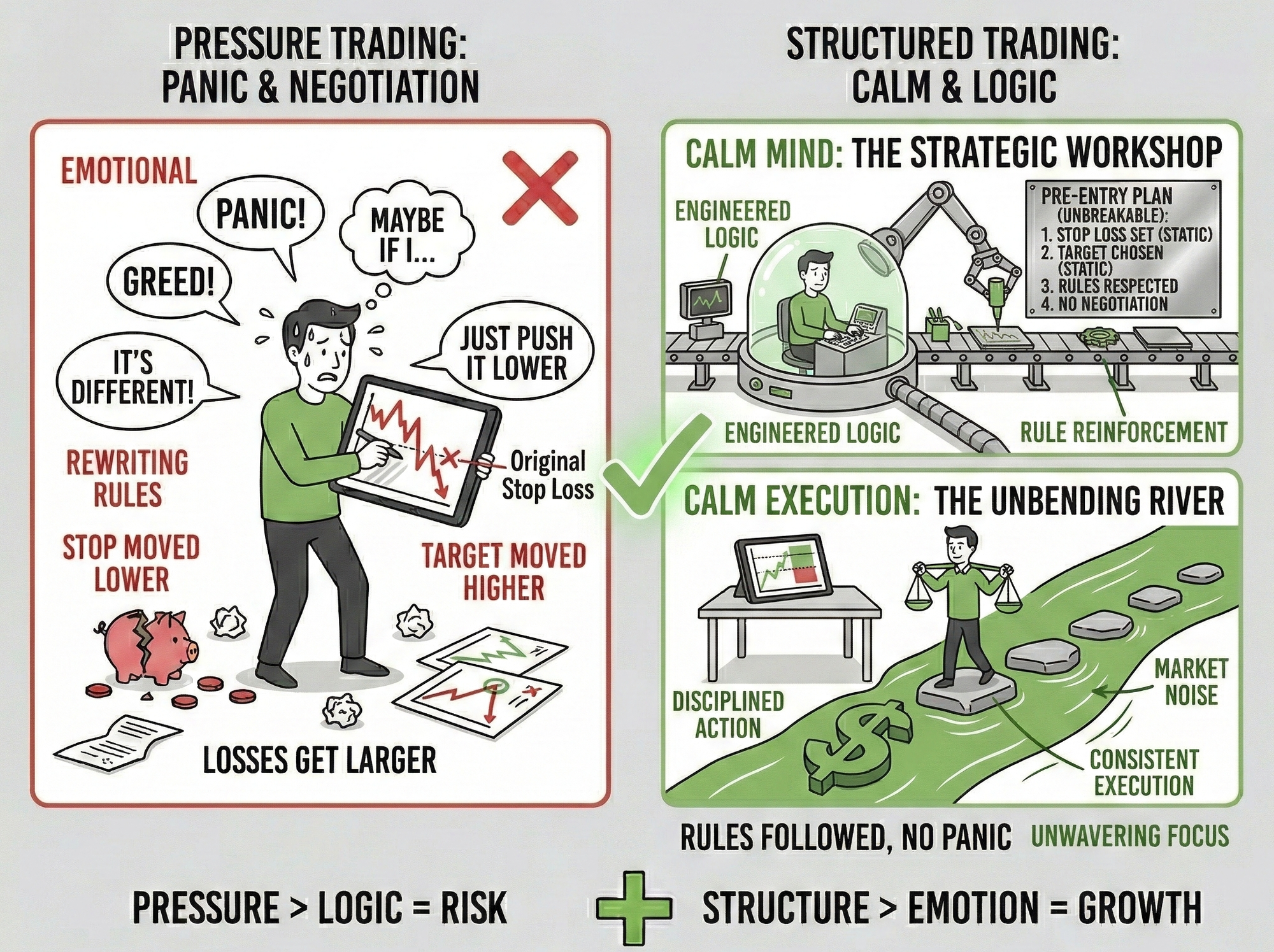
Most traders make a plan before they enter. They set a stop loss. They choose a target. Everything looks clear. Then price starts moving, and fear or greed shows up.
That’s when the rules get rewritten. The stop gets moved further away. The target gets pushed higher. A normal pullback suddenly feels dangerous. Decisions become emotional instead of structured.
Strong traders respect the plan they made in a calm moment. They know the rules were set with logic, not panic. If the setup is wrong, they take the loss and review later. They do not negotiate with the trade.
When you keep your rules steady, your results get clearer. You learn what works and what doesn’t. You build confidence because your actions stay consistent.
Discipline grows when rules stay firm.
If you want trading guidance that helps you stick to your plan and avoid emotional changes mid-trade, these newsletters help. They focus on structure, discipline, and steady improvement.

Gravestone Doji
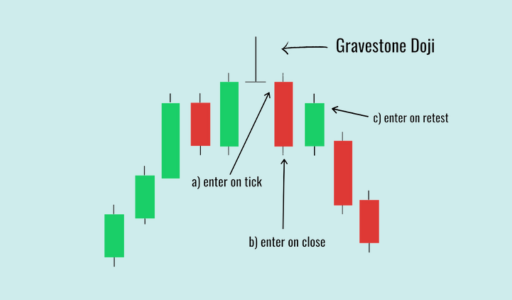
The Gravestone Doji is a bearish reversal pattern that is the exact opposite of the Dragonfly. It forms when the open, low, and close are all at the same level at the bottom of the candle, leaving a long upper wick. It visualizes a "failed rally"—buyers pushed the price significantly higher, but by the end of the session, sellers completely took over and dragged the price back down to the floor, "burying" the bulls.
🛠️ The Strategy Logic
Use these logical triggers to identify when a rally has turned into a trap and a price drop is coming:
- IF: The Gravestone Doji forms at the peak of an uptrend or near the Upper Keltner Channel...
- THEN: It is a high-conviction bearish signal. The long upper wick proves that the market has hit a supply zone where sellers are aggressive enough to neutralize every bit of buying pressure.
- IF: The next candle closes below the low of the Gravestone Doji...
- THEN: The reversal is confirmed. This confirms that the rejection seen in the wick wasn't just a fluke, but the start of a new downward move. This is your signal to exit longs or enter shorts.
- IF: The Gravestone Doji appears after a parabolic (vertical) price spike...
- THEN: This is likely a "Blow-off Top." The market has reached a state of "buying exhaustion" where the last of the buyers have been filled, leaving only sellers remaining.
- IF: The long upper wick hits a major horizontal resistance level or a Fibonacci extension...
- THEN: The signal is reinforced by "Confluence." The technical level provided the resistance, and the Gravestone is the proof that the market respected that resistance.
- IF: The Volume Oscillator shows a spike on the Gravestone candle...
- THEN: The "Distribution" is heavy. High volume on a Gravestone indicates that institutional players used the high prices to offload large positions onto retail buyers who were chasing the move.
💡 Pro Tip
The "Supply Zone" Marker: Think of the Gravestone Doji as a "tombstone" for the bulls. The entire length of that long upper wick is now a Supply Zone. If the price tries to rally back into that wick in the future, it will likely face heavy selling again from the "trapped" buyers trying to break even. Always set your stop-loss just above the top of the Gravestone’s wick. If price breaks above that high, the bearish thesis is dead.

The Break-Even Obsession
There’s a moment in almost every trade.
Price moves slightly in your favor. Not much. Just enough to breathe.
And your brain whispers: “Lock it in. Move stop to break-even. At least you can’t lose.”
Sounds responsible. Sounds disciplined.
It’s often neither.
BREAK-EVEN IS NOT RISK MANAGEMENT. It’s usually FEAR MANAGEMENT.
You’re not protecting capital.
You’re protecting your ego from being wrong.
Here’s what most traders don’t realize:
Markets breathe. Structure pulls back. Clean trends retest.
When you shift your stop too early, you place it exactly where NORMAL PRICE MOVEMENT lives.
And then?
You get tapped out.
Price resumes.
The full move happens — without you.
You avoided a small loss.
But you sacrificed a STRUCTURED WIN.
That habit compounds quietly.
Over weeks, you create a system that wins small and misses big.
Professionals don’t ask, “How fast can I get to break-even?”
They ask, “Has structure changed?”
Big difference.
Break-even only makes sense when:
- The trade has moved meaningfully.
- Structure has shifted in your favor.
- The original risk thesis is invalidated.
Anything earlier is emotional discomfort disguised as discipline.
Let’s be honest:
You don’t hate losses.
You hate being wrong.
And break-even feels like a psychological loophole.
But trading isn’t about feeling safe.
It’s about executing probabilities.
If your edge requires breathing room — give it room.
Stop trying to eliminate risk mid-trade.
You already accepted it when you clicked buy or sell.
Your job isn’t to escape discomfort.
Your job is to manage risk according to plan.
The market doesn’t reward the trader who avoids red ticks.
It rewards the trader who understands that temporary discomfort is often the price of asymmetric reward.
Next time you feel that urge to drag your stop to entry, pause and ask:
“Am I protecting structure — or protecting my pride?”
Trade like a professional.
Let your edge breathe.