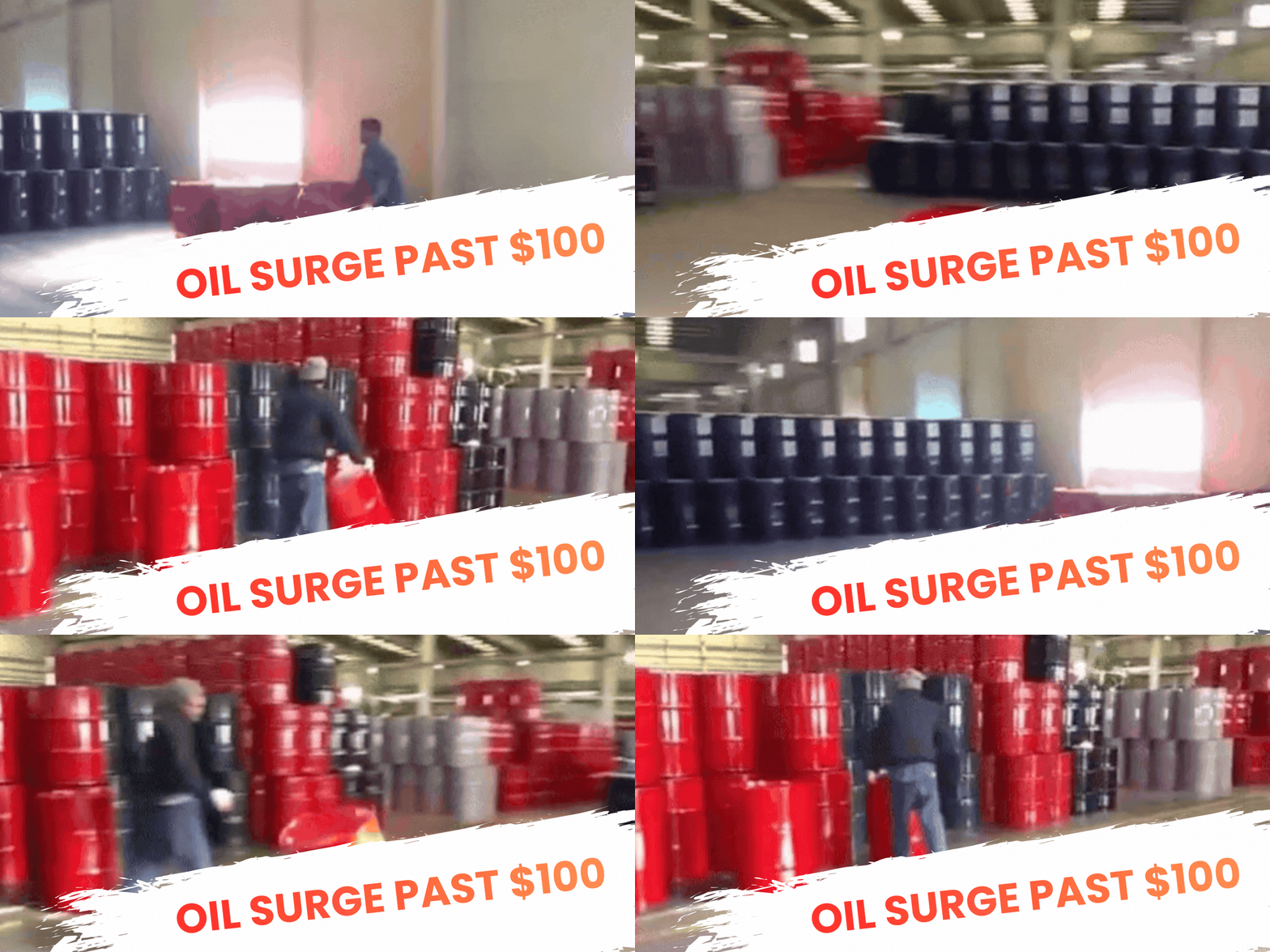
Oil Surge Past $100
....................................................................................................................


Good morning,
The week is starting with a risk-off jolt.
Futures are sharply lower as oil prices explode higher, reminding traders how quickly geopolitics can override everything else on the screen.
Contracts tied to the Dow Jones Industrial Average, S&P 500, and Nasdaq-100 all tumbled overnight after crude surged past the $100 mark, briefly pushing toward $110 as supply fears intensified across the Middle East.
The spike follows escalating tensions around Iran and fresh production disruptions in the region, with output cuts reported in Kuwait and a sharp drop in Iraqi production.
At the center of the shock is the closure of the Strait of Hormuz, a critical artery for global oil flows. Energy markets reacted instantly — and equities followed.
Right now, the tone across markets is simple: energy up, risk assets down. Traders are scrambling to price in the inflation shock that comes with triple-digit oil, while policymakers may soon step in.
Discussions among G7 nations about releasing strategic reserves are already circulating as governments try to prevent the surge from spiraling into a broader economic hit.
Add in a bruising selloff last week and key inflation data arriving in the days ahead, and the market is stepping into Monday on uneasy footing.

🚨 Oil Surges Past $100 as Iran War Disrupts Supply
Brent crude jumped 16.5% to over $107, while U.S. WTI climbed 16.9% to $106.22, marking the first time oil topped $100 in nearly four years as the Iran conflict rattles global energy markets.
📊 S&P 500 Rebounds as Tech and Defense Lead Recovery
The S&P 500 clawed back early losses after investors reassessed the economic impact of weekend strikes involving the United States and Israel.
📉 Gold Drops 3% as Oil Spike Sparks Rate Fears
Bullion slid 3% to around $5,015 as a stronger dollar and oil’s surge toward $120 raised concerns that central banks may keep interest rates higher for longer.
🏗️ Nvidia Backs $14.6B AI Data Center Startup
Nvidia supported AI infrastructure firm Nscale as it raised $2 billion at a $14.6 billion valuation, highlighting the ongoing boom in AI computing demand.
🪙Bitcoin Faces Key Trendline Battle Near $67K
Bitcoin hovered around $67,800 as traders warned the 200-week moving average could turn into fresh resistance, with some analysts eyeing a possible $60K downside target.
🛍️ Shopify Could Rally Another 15%
Analysts say Shopify may gain 15% more after OpenAI adjusted ChatGPT’s checkout system to route purchases through partner apps instead of directly inside the chatbot.
🇪🇺 European Stocks Sink 2% as Oil Shock Hits Markets
The pan-European Stoxx Europe 600 fell 2.1% as rising oil prices and escalating Middle East tensions rattled investor confidence.

Your Strategy Can’t Rule Every Market
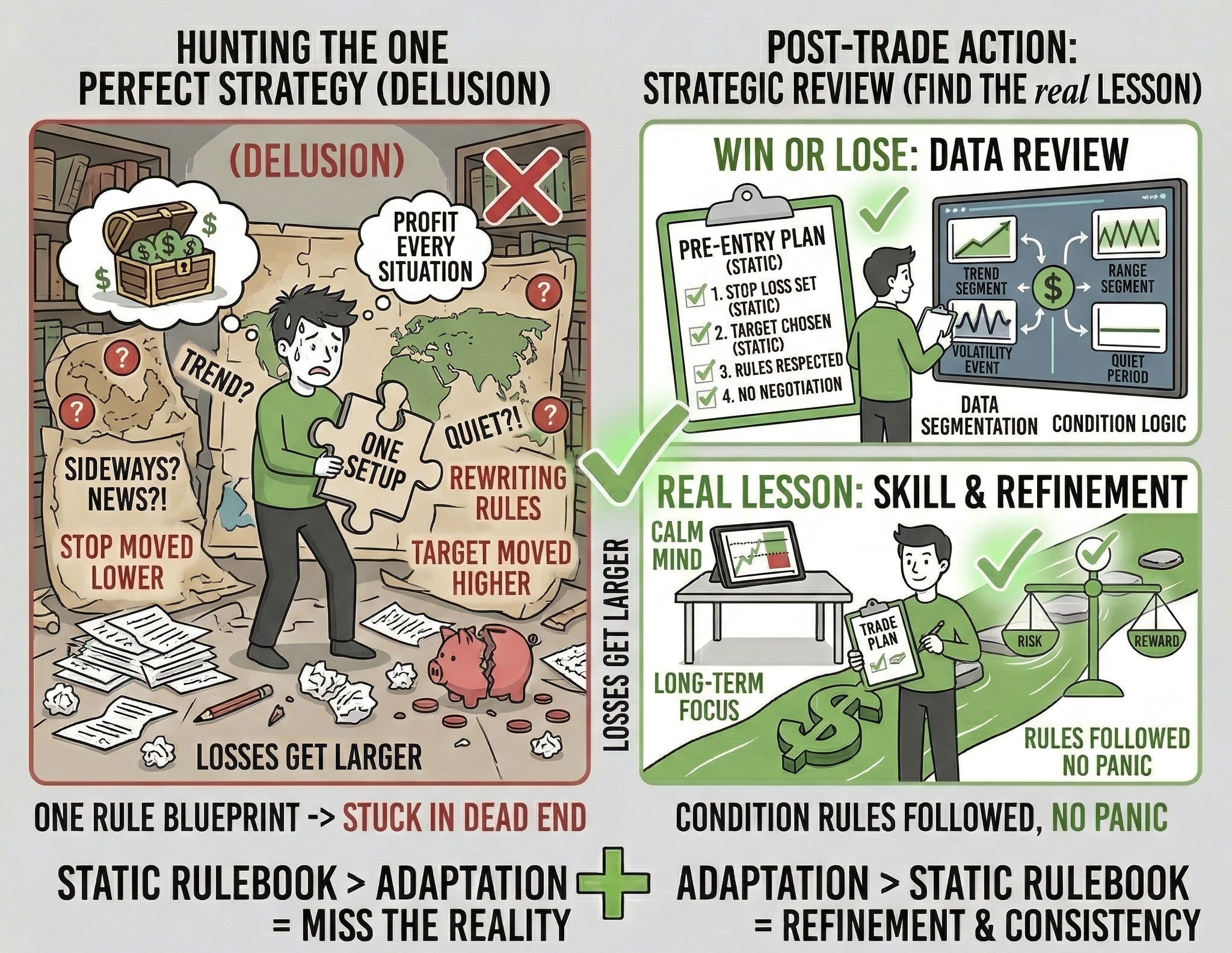
Many traders look for one perfect strategy that works all the time. One setup. One pattern. One rule that delivers profits in every situation.
But markets don’t behave the same way every day.
Sometimes the market trends smoothly. Other times it moves sideways. News events can create sudden volatility. Quiet periods can make price move slowly. The same strategy that works well in one condition may struggle in another.
This is where frustration starts. Traders think the strategy failed, when the real issue is the environment changed.
Strong traders understand context. They know when conditions match their strategy and when they don’t. If the market is not suitable for their setup, they simply wait.
When you accept that no strategy works everywhere, trading becomes more realistic. You stop forcing trades and start respecting market conditions.
Adaptation protects consistency.
If you want trading guidance that helps you recognize different market conditions and apply strategies more effectively, these newsletters help. They focus on clarity, discipline, and steady improvement.

Balance of Power (BOP)
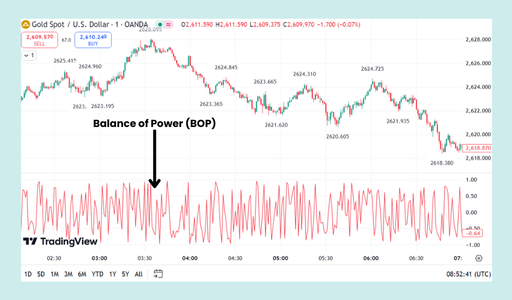
The Balance of Power (BOP) is an oscillator that measures the strength of buyers versus sellers by assessing the ability of each side to drive price to extreme levels.
Unlike other indicators that focus on closing prices, BOP evaluates the price action relative to the high-low range. It tells you who is "winning" the tug-of-war at any given moment, regardless of the overall trend.
🛠️ The Strategy Logic
Use these logical triggers to identify who is truly in control of the market's "driving seat":
- IF: The BOP line crosses above the zero line...
- THEN: Buyers have taken the lead. This indicates that the market is consistently pushing toward the daily highs, signaling a bullish shift in sentiment.
- THEN: Buyers have taken the lead. This indicates that the market is consistently pushing toward the daily highs, signaling a bullish shift in sentiment.
- IF: The BOP remains high (above 0) while the price is in a pullback...
- THEN: The pullback is "weak." Even though the price is dropping, the underlying "power" remains with the bulls. This is often a high-probability "Buy the Dip" setup.
- THEN: The pullback is "weak." Even though the price is dropping, the underlying "power" remains with the bulls. This is often a high-probability "Buy the Dip" setup.
- IF: The price hits a new high, but the BOP is making lower highs (Bearish Divergence)...
- THEN: The trend is "fatigued." While the price is climbing, the bulls are losing their ability to push the price toward the session highs. This is a primary warning that a reversal is coming.
- THEN: The trend is "fatigued." While the price is climbing, the bulls are losing their ability to push the price toward the session highs. This is a primary warning that a reversal is coming.
- IF: The BOP line crosses below the zero line...
- THEN: Sellers have seized control. The market is now being driven toward the daily lows, confirming that bearish pressure is dominating the session.
- THEN: Sellers have seized control. The market is now being driven toward the daily lows, confirming that bearish pressure is dominating the session.
- IF: The BOP reaches an extreme peak (+1 or -1) and begins to flatten...
- THEN: The market is "over-leveraged." One side has pushed the price as far as it can go for now. Expect a period of consolidation or a "mean reversion" back toward the zero line.
💡 Pro Tip
The "Smooth" Operator: Raw BOP data can be very jagged and produce many "false" zero-line crosses. To make this strategy work, always apply a 14-period Moving Average to the BOP line. Only take signals when the smoothed line crosses the zero mark. This ensures you are following the "major power" shift rather than just a single day's volatility.

The Green Day Complacency Effect
The danger rarely shows up after a loss.
It shows up after a big win.
You close the platform feeling sharp.
Trades worked. Execution felt smooth. Confidence is high.
You tell yourself: “I’m in the zone.”
But something subtle happens overnight.
SUCCESS QUIETLY LOWERS YOUR GUARD.
The next day you approach the market differently.
You scan faster. You size a little bigger. You assume you’ll see the next move clearly.
Why?
Because the brain loves recent proof. One strong day convinces you that momentum, not discipline - produced the result.
This is where complacency creeps in.
CONFIDENCE BECOMES CASUALNESS.
The setups you once waited for now look “close enough.” Risk feels lighter. Patience feels unnecessary.
You stop trading your process and start trading your recent success.
That’s when mistakes show up.
The forced trade. The oversized position. The early entry.
And by the end of the session, yesterday’s clean profits start leaking away.
Professional traders understand something most people overlook:
THE DAY AFTER A BIG WIN IS A RISK DAY.
Not financially - mentally.
It’s the day discipline must get tighter, not looser.
Same routine. Same sizing. Same patience.
No victory laps. No shortcuts.
Because the market doesn’t care about yesterday’s P&L.
And momentum in trading doesn’t come from winning days.
It comes from repeating the same disciplined process - whether the last trade was green or red.
The real test of a strong trader isn’t how they handle losses.
It’s whether they can stay humble after success.