Fed Signal Incoming
....................................................................................................................


Good morning.
Midweek, and the market is trying to find its footing again.
Futures are pushing higher as traders cautiously step back into risk after the Iran-driven shock, with the Dow Jones Industrial Average, S&P 500, and Nasdaq-100 all pointing to a third straight recovery attempt. It’s not aggressive buying , more like a measured rebound as the panic bid in oil begins to cool.
Crude is finally easing off the highs, giving equities some breathing room after the chaos tied to tensions around Iran and disruptions near the Strait of Hormuz. That pullback in energy is key because the entire inflation narrative right now hinges on whether that spike was temporary… or the start of something stickier.
But let’s be clear: the real event hasn’t happened yet.
All eyes are on the Federal Reserve decision later today. Traders aren’t expecting a rate move — but what matters is how Jerome Powell frames the situation.
Does the Fed look through the oil shock, or signal concern that it could reignite inflation?
That answer will set the tone.
Right now, this bounce feels tentative — a market stabilizing, not one fully convinced the danger has passed.

📉 Oil Slips Despite UAE Attacks as U.S. Inventories Rise
Brent crude fell 1.17% to $102.19, while U.S. oil dropped 1.81% to $94.56, as rising inventories offset geopolitical risks tied to attacks in the United Arab Emirates.
📈 U.S. Futures Climb Ahead of Fed Decision
Futures edged higher with Dow up 0.5%, S&P 500 0.4%, and Nasdaq 0.6% as investors cautiously position ahead of the Federal Reserve rate decision.
🤖 China AI Stocks Surge After Nvidia Hype
Shares of Chinese AI firms jumped after Jensen Huang of Nvidia called OpenClaw the “next ChatGPT,” boosting optimism around AI agents.
⚖️ Microsoft Eyes Legal Action Over $50B AI Deal
Microsoft is reportedly weighing legal action against Amazon and OpenAI over a $50 billion cloud deal that could breach existing agreements.
🚗 Tesla Bear Bets Hit Record Low
Short interest in Tesla dropped to just 1.6%, signaling strong investor confidence even as Nvidia builds out a competing AI-driven autonomy ecosystem.
🌏 Asian Stocks Rally as Oil Retreats
Regional markets climbed as easing oil prices lifted sentiment, while investors turned focus to signals from the Federal Reserve on future rate cuts.
⏳ Gold Holds Near $5,000 Ahead of Fed Call
Gold hovered around the $5,000 level as traders stayed cautious, awaiting clarity on monetary policy from the Federal Reserve.

Confidence Shouldn’t Change After One Trade
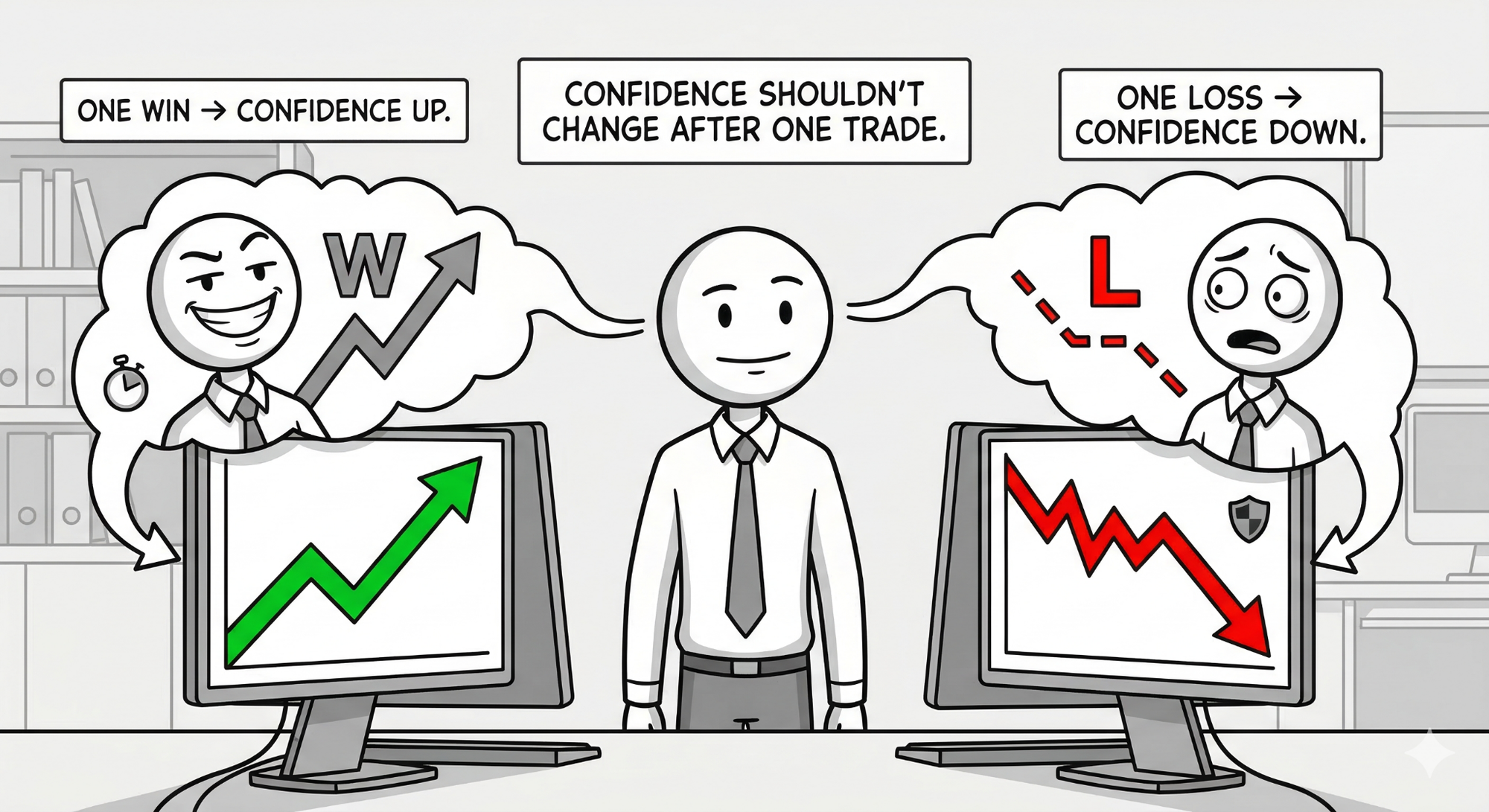
Many traders let their last trade control how they feel.
One win and confidence shoots up. One loss and everything starts to feel uncertain. The mindset keeps swinging based on the most recent result.
That’s where instability begins.
A single trade does not define your skill. It does not prove your strategy works or fails. When confidence depends on short-term outcomes, decisions become emotional instead of consistent.
Strong traders think in sequences. They judge performance over many trades, not one. They focus on execution, not just results.
When you stop tying your confidence to one trade, your mindset becomes steadier. You follow your plan with less hesitation. You trust your process instead of reacting to every outcome.
Stability builds consistency.
Learning markets often means seeing different perspectives. Some traders like exploring how others break down price action and trends.

Disparity Index
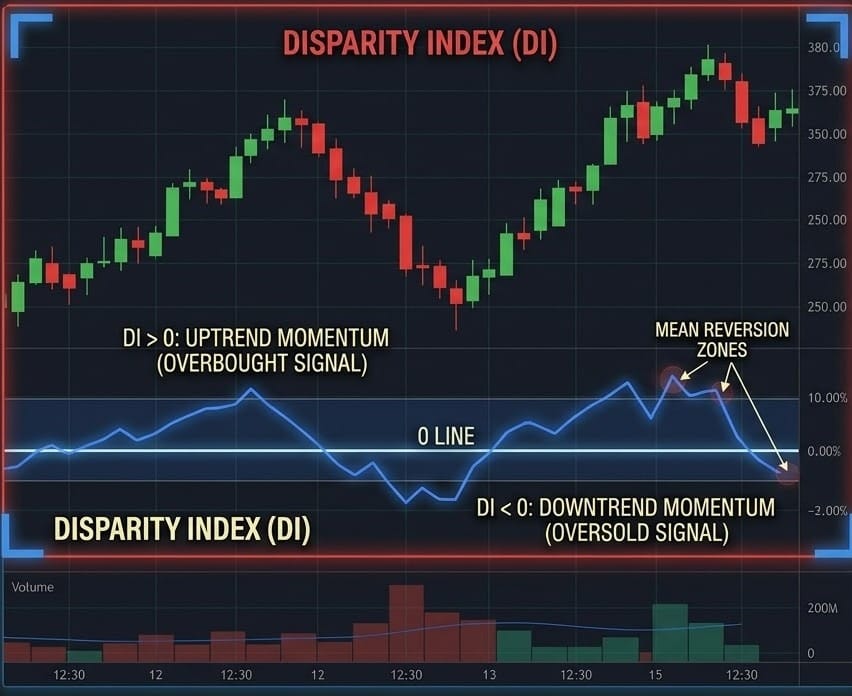
The Disparity Index is a technical indicator that measures the relative position of an asset's most recent closing price to a selected moving average.
It is expressed as a percentage. Simply put, it tells you how "stretched" the price is from its "fair value."
It is one of the best tools for identifying mean-reversion trades—when the rubber band has been pulled too far and is about to snap back.
🛠️ The Strategy Logic
Use these logical triggers to identify overextended price action and time your "snap-back" entries:
- IF: The Disparity Index is significantly above zero (e.g., > 5% or 10%)...
- THEN: The asset is "Overextended" to the upside. Price has moved too far, too fast away from its moving average. Expect a pullback or sideways consolidation as the price "waits" for the average to catch up.
- THEN: The asset is "Overextended" to the upside. Price has moved too far, too fast away from its moving average. Expect a pullback or sideways consolidation as the price "waits" for the average to catch up.
- IF: The Disparity Index is significantly below zero (e.g., < -5% or -10%)...
- THEN: The asset is "Oversold." This suggests a "Panic Selling" climax has occurred. Look for bullish reversal candles (like a Hammer or Piercing Line) to trade the bounce back toward the moving average.
- THEN: The asset is "Oversold." This suggests a "Panic Selling" climax has occurred. Look for bullish reversal candles (like a Hammer or Piercing Line) to trade the bounce back toward the moving average.
- IF: The Disparity Index crosses the zero line from below...
- THEN: The short-term momentum has turned bullish. The price has successfully climbed above its moving average, signaling that the "fair value" has shifted upward.
- THEN: The short-term momentum has turned bullish. The price has successfully climbed above its moving average, signaling that the "fair value" has shifted upward.
- IF: Price hits a new high, but the Disparity Index peak is lower than the previous peak...
- THEN: You have a "Momentum Divergence." Even though the price is higher, it is actually closer to its moving average than it was during the last rally. This is a subtle warning that the trend is losing its "stretch" and is about to fail.
- THEN: You have a "Momentum Divergence." Even though the price is higher, it is actually closer to its moving average than it was during the last rally. This is a subtle warning that the trend is losing its "stretch" and is about to fail.
- IF: The Disparity Index is hovering near zero for an extended period...
- THEN: The market is in a "Low Volatility" or "Squeeze" phase. Price and the moving average are moving in lockstep. This is often the quiet before a major expansion; wait for a sharp move away from zero to pick the new direction.
💡 Pro Tip
The "Lookback" Rule: The Disparity Index is only as good as the Moving Average you choose. For your swing trades, use a 13-period or 20-period EMA as your base. For long-term trend analysis, use the 200-period SMA.
If the 200-day Disparity Index hits -20%, you aren't just looking at a "dip"—you are looking at a once-in-a-year value opportunity.
Always check the historical "max stretch" of the specific stock you are trading to know what a "normal" extreme looks like for that asset.

The Social Media Entry
You weren’t even looking for a trade.
Charts were closed.Plan was done.Discipline intact.
Then you open your phone.
A trader posts a chart. Clean lines. Bold caption.
“THIS IS THE MOVE.”
“Don’t miss this.”“Easy setup.”
Suddenly… you’re interested.
You open your platform.
Pull up the chart.
Convince yourself you “see it too.”
And just like that — you’re in a trade you never planned.
THAT’S NOT ANALYSIS. THAT’S INFLUENCE.
Social media trades hit different because they come with borrowed conviction.
It’s not your idea.It’s not your setup.It’s not your timing.
But it feels strong — because someone else sounds certain.
And certainty is contagious.
So you enter late.
At a worse price.
With no clear invalidation.
Now you’re managing a position you don’t fully understand.
That’s where things break.
Price pulls back — you panic.
Price stalls — you doubt.Price reverses — you freeze.
Because deep down, you never owned the trade.

CONVICTION YOU BORROW CAN’T BE MANAGED UNDER PRESSURE.
Even worse?
If it wins, it reinforces the habit.
You start scanning social media for trades, not for information.
Your process slowly disappears.
Professionals don’t trade ideas they didn’t plan.
They might observe.
They might note.
But they only execute when it aligns with their system, their levels, their rules.
Because in trading, responsibility is absolute.
If you click the button, the outcome is yours.
Not the person who tweeted it.
Not the chart you saw.
Not the thread you followed.
Just you.
Before entering any trade, ask one simple question:
“Would I take this if I never saw it online?”
If the answer is no — step back.
Because the market doesn’t reward the loudest voice.
It rewards the clearest plan.